
Products
In the world of modern manufacturing, product texture is often a competitive advantage. Think about the difference between a gritty hand cream and one that glides on silkily, or a salad dressing that separates instantly versus one with a velvety, consistent pour. That difference is not just a recipe; it is a function of engineering. At the heart of this transformation lies the emulsifying machine.
For formulators and production managers, the emulsifying machine is not merely a piece of stainless steel hardware; it is the critical control point for quality, stability, and yield. Whether you are processing nano-emulsions for pharmaceuticals or high-viscosity creams for cosmetics, the selection and operation of your emulsification equipment dictate your product’s shelf life and sensory appeal. This guide goes beyond the basics to explore how modern emulsifying technology can solve persistent production challenges and elevate your formulations to the next level.
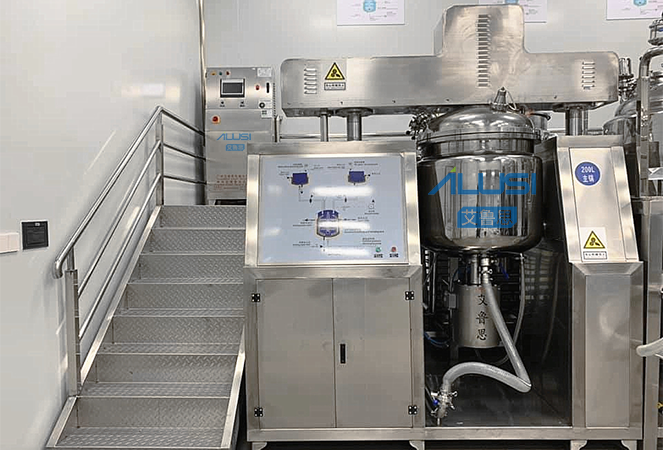
To appreciate the capabilities of a high-performance emulsifying machine, one must first understand the physical challenge it overcomes. Oil and water are immiscible; they naturally separate because of high interfacial tension. Creating a stable emulsion requires forcing one phase to disperse into the other in the form of tiny droplets and then keeping them from coalescing. This is where the mechanical force of an emulsifying machine becomes indispensable.
The workhorse of most batch and inline systems is the rotor-stator generator. This consists of a high-speed rotor precisely fitted inside a stationary stator. As the rotor blades spin at speeds often exceeding 3,000 RPM, they create a powerful suction that draws both the heavy and light phases into the workhead . Once inside, the materials are subjected to intense mechanical and hydraulic shear. Centrifugal force drives the mixture against the walls of the stator and forces it out through the perforations at high velocity. This process creates a continuous cycle of intake and expulsion, typically processing the entire batch volume many times per minute . The result is a dramatic reduction in droplet size—often down to the micron or sub-micron level.
It is a common misconception that an agitator or stirrer can achieve the same results as a dedicated emulsifying machine. Simple mixers rely on bulk flow, which is ineffective at overcoming the surface tension between immiscible liquids. An emulsifying machine, however, combines several unit operations into one. It disperses the discontinuous phase, shears the droplets to reduce their size, and homogenizes the mixture to ensure uniformity. Modern machines also facilitate the rapid adsorption of emulsifiers onto the newly created droplet surfaces, which is critical for long-term stability .
For industries like pharmaceuticals and cosmetics, where aeration is the enemy of product quality and oxidation degrades active ingredients, the vacuum emulsifying machine is the gold standard. These systems are engineered with precision to handle complex formulations under controlled atmospheric conditions.
The construction of the tank itself plays a vital role in process integrity. High-end emulsifying machines typically feature a three-layer vessel construction. The inner layer, which contacts the product, is usually made of high-grade stainless steel like SUS316L, offering superior corrosion resistance and a mirror polish finish (often 300 mesh or finer) to prevent bacterial adhesion and facilitate cleaning . The middle layer is a heating/cooling jacket, and the outer layer provides insulation to maintain thermal efficiency and protect operators.
In high-viscosity applications (up to 50,000 cP or more), a central high-shear rotor alone is insufficient to move the mass of the product. This is where a slow-speed scraper agitator becomes essential. Rotating at speeds typically between 0 and 60 RPM, this frame continuously lifts material from the tank walls and folds it back toward the center, ensuring that the entire batch is fed into the high-shear zone . This dual-motion system eliminates “dead spots” and ensures complete thermal uniformity throughout the heating and cooling phases.
Operating under vacuum is not just about removing air bubbles for a glossy finish; it is a functional requirement. By pulling a vacuum down to -0.09 MPa or lower, the machine actively deaerates the product . This prevents the oxidation of sensitive ingredients like vitamins, essential oils, and active pharmaceutical ingredients (APIs). It also ensures that when you fill your final containers, there is no trapped air that could lead to bacterial growth or product separation during storage.
While rotor-stator mixers dominate the market, recent advances in process intensification have introduced alternative methods that offer unique advantages, particularly for rigid quality requirements and energy efficiency.
Ultrasonic emulsifying machines use high-frequency sound waves to generate acoustic cavitation. When these intense waves propagate through a liquid, they create microscopic bubbles that collapse violently. These implosions generate micro-jets and extreme shear forces that fracture droplets . This method is exceptionally effective for producing very fine emulsions and even nano-emulsions with narrow droplet size distributions. It is a non-thermal process, meaning it is ideal for temperature-sensitive bioactives in food and pharmaceutical applications, preserving flavor compounds and vitamins that would otherwise degrade under heat .
Recent academic research has highlighted the potential of vortex-based hydrodynamic cavitation (HC) devices for continuous emulsion production. Unlike traditional high-pressure homogenizers that force fluid through a fixed gap, HC devices utilize fluid dynamics within a controlled vortex to generate cavitation. Studies comparing various devices found that vortex-based HC devices exhibited the highest energy efficiency, achieving smaller Sauter mean diameters (d32) with significantly lower energy consumption per kilogram of emulsion . For large-scale operations, this translates directly into lower operating costs and a smaller carbon footprint.
Choosing between a shear pump, an inline homogenizer, or a batch vacuum system depends entirely on your product parameters and production scale. Making the wrong choice can lead to millions of dollars in lost product or inefficient processing.
For operations that require pumping combined with moderate shearing—such as transferring a pre-mix or creating a coarse emulsion—a shear pump is an excellent, cost-effective choice. They handle high flow rates and are durable enough for abrasive or fibrous products, typically achieving particle sizes down to 20-50 microns .
However, if your formulation requires intense emulsification with particle sizes in the range of 1-5 microns or lower—such as in liposomal serums, vaccines, or high-end flavor emulsions—you require an inline homogenizer . These machines feature multi-stage rotor-stator generators with tighter tolerances, providing the high energy density needed for fine dispersions. They offer precise control over droplet size distribution but often require a feed pump for high-viscosity materials.
For products requiring multiple steps—such as heating the water phase, melting the oil phase, emulsifying, and then cooling while deaerating—a batch vacuum emulsifying machine is the most flexible solution. These systems allow for manual or automated control of each phase, ensuring that delicate ingredients are added at the correct temperature and that the final product is perfectly smooth and stable . They are the standard in R&D labs and multi-product plants where formulation flexibility is key.
The journey from a lab-scale prototype to full-scale production is fraught with challenges. An emulsion that works beautifully in a 5-liter vessel might fail catastrophically when scaled up to 5,000 liters. Successful scale-up relies on maintaining geometric and dynamic similarity—keeping the tip speed of the rotor and the energy per volume consistent. Leading manufacturers now offer skid-mounted pilot plants that allow formulators to precisely replicate shear rates and residence times, ensuring a smooth technology transfer to production floors .
Furthermore, modern emulsifying machines are no longer isolated units. Industry 4.0 integration allows them to communicate with upstream process vessels and downstream filling lines. Programmable Logic Controllers (PLC) with touchscreen interfaces store hundreds of product recipes, automatically adjusting mixing speeds, temperature curves, and vacuum levels to ensure repeatable quality batch after batch, regardless of operator shift changes .
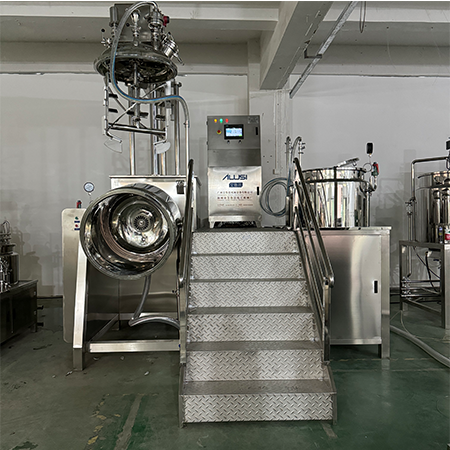
An emulsifying machine is an investment in your product’s identity. Whether you leverage the intense cavitation of ultrasonic reactors for cutting-edge nanomaterials, the energy efficiency of vortex-based systems for bulk commodities, or the reliable versatility of vacuum rotor-stators for cosmetics and pharmaceuticals, the technology you choose defines your output. By understanding the mechanics of shear, the importance of vacuum deaeration, and the nuances of droplet size control, manufacturers can turn the challenge of mixing the unmixable into a streamlined, profitable process.

Contact Us