
Products
In the world of manufacturing, texture is truth. Whether it’s the glossy spread of a lipstick, the gritty smoothness of a pharmaceutical ointment, or the creamy mouthfeel of mayonnaise, the quality of your product hinges on one critical piece of equipment: the emulsifying machine. As global demand for high-performance cosmetics, clean-label foods, and injectable pharmaceuticals rises, the humble mixing tank has evolved into a sophisticated piece of engineering. With the global emulsifying equipment market projected to reach $1.48 billion by 2030 (growing at a 7.2% CAGR), understanding the technology behind these machines is no longer just an operational concern—it’s a competitive advantage .
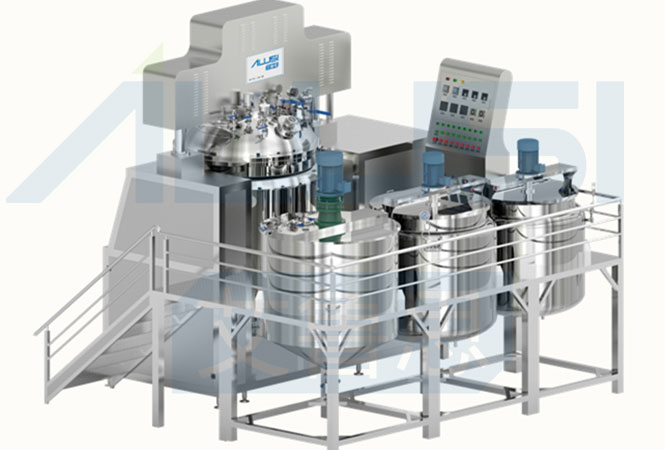
For plant managers and procurement specialists, the choice isn’t simply about which machine is the largest or the cheapest. It’s about understanding shear force, vacuum deaeration, and cleanability. This guide cuts through the technical jargon to provide a deep, actionable analysis of modern emulsifying systems, ensuring your next capital investment doesn’t just mix ingredients—it perfects them.
At its most fundamental level, an emulsifying machine is designed to do what nature prefers not to: force two immiscible liquids, such as oil and water, into a stable suspension. This is achieved through a powerful mechanical process known as high-shear mixing. Unlike simple agitators that merely stir the contents, a high-shear mixer utilizes a rotor-stator generator .
Mounted at the bottom or within the tank, the rotor spins at incredibly high speeds—often up to 3,500 RPM—creating a powerful suction that draws materials into the workhead . Once inside the precision-machined gap between the rotor and stator (sometimes as narrow as 0.5mm), the mixture is subjected to intense mechanical and hydraulic shear . This tears droplets apart, reducing them to micron or even sub-micron sizes. The result is a homogeneous, stable emulsion that resists separation over time. This process is critical in everything from creating nano-emulsions in skincare to ensuring the stability of adjuvants in vaccines.
The surge in demand for emulsifying equipment is directly linked to shifts in consumer behavior. In the pharmaceutical sector, increased healthcare awareness and spending on sanitation goods drive the need for highly reliable machinery to produce consistent ointments, creams, and oral suspensions . The cosmetics industry relies on these machines to create the luxurious textures demanded by modern consumers. Meanwhile, the food industry’s pivot towards clean-label products requires emulsifiers that can handle natural ingredients without sacrificing shelf-life stability . This triad of industries—pharma, cosmetics, and food—continues to push manufacturers toward more precise, efficient, and sanitary emulsifying solutions.
To truly evaluate an emulsifying machine, one must look beneath the stainless steel cladding. Modern vacuum emulsifiers are complex systems where metallurgy, fluid dynamics, and automation converge.
A high-quality emulsifying machine is defined by its construction. The industry standard involves a three-layer tank design . The inner tank is typically crafted from SUS316L stainless steel, a grade prized for its superior corrosion resistance, especially against the acidic or saline nature of many cosmetic and pharmaceutical formulations. The middle layer serves as a jacket for heating or cooling media, while the outer layer (usually SUS304) provides structural integrity and insulation .
Insulation is a critical, often overlooked feature. Polyurethane (PU) foam insulation between the layers ensures temperature consistency during processing, preventing scorching or degradation of heat-sensitive ingredients . Furthermore, a mirror-polish finish (up to 300 mesh) on the interior surfaces is non-negotiable. It prevents product from sticking, facilitates cleaning, and ensures compliance with Good Manufacturing Practices (GMP) .
The magic happens through a dual-movement system. The first component is the slow-speed scraper. Operating at a gentle 0–60 RPM, this frame continuously scrapes the heated walls of the tank, folding the viscous material back towards the center . This prevents burn-on and ensures that the bulk of the product is continuously fed into the high-shear zone.
The second component is the high-shear homogenizer. Driven by motors that can reach 2.2 kW or more in lab-scale models, and significantly higher in industrial units, this is where particle size reduction occurs . The combination of these two speeds ensures that even products with viscosities up to 50,000 cP are processed uniformly, eliminating “fish eyes” or undissolved polymers .
Why process under vacuum? Air is the enemy of emulsions. During standard mixing, air bubbles become trapped, leading to oxidation, bacterial growth, and an unappealing frothy appearance. A vacuum system, typically using a water-ring pump, creates negative pressure (down to -0.09 MPa) inside the tank . This vacuum draws air out of the raw materials before and during emulsification. The result is a product that is denser, smoother, and has a longer shelf life because the oxidation process is significantly retarded .
Selecting the wrong emulsifying machine can lead to years of inefficiency, poor product quality, and costly maintenance. B2B buyers must look beyond the brochure and evaluate equipment based on specific production realities.
Not all emulsifying machines are created equal. For low-viscosity liquids requiring continuous processing, an in-line mixer might suffice. These systems operate continuously, making them ideal for high-throughput operations where the product needs to pass through the shear zone once . However, for high-viscosity creams, gels, and ointments, a batch vacuum emulsifier is the superior choice .
When evaluating, consider the “working volume” versus the total tank volume. A machine like the DG-100 might have a 140L tank but only a 100L working capacity to allow for vortexing and splashing . If you are handling abrasive materials like titanium dioxide in dyes or thick pigments, you must ensure the rotor-stator tolerance is robust enough to handle wear without losing efficiency .
A crucial factor in modern manufacturing is scalability. What works in a 5-liter lab beaker often fails in a 500-liter production tank. Leading suppliers now offer emulsifying machines that are geometrically scalable . This means the ratio of the rotor diameter to the tank diameter, and the shear gap, remain consistent across different models. For R&D departments, lab-scale emulsifiers (like the VEVOR homogenizer with 50-100 L/H capacity) allow for formula optimization without wasting expensive raw materials . Once the formula is perfected, the process parameters can be transferred directly to production-scale machines, ensuring that the first batch off the line matches the pilot batch perfectly .
An emulsifying machine is a significant capital asset. To protect that investment and prevent costly downtime, a rigorous maintenance protocol is essential. Data suggests that facilities with proactive maintenance programs experience significantly less unplanned downtime compared to those that adopt a “run-to-failure” model.
Maintenance should be viewed as a tiered process .
Daily maintenance involves visual inspections for leaks, listening for abnormal vibrations, and ensuring the machine is cleaned thoroughly after each batch to prevent product build-up .
Monthly maintenance requires a deeper dive. Operators should disassemble the homogenizing head to inspect the rotor and stator for wear or burrs. The seals and gaskets should be checked for pliability and cracks. If the machine uses mechanical seals, the oil reservoirs should be checked for contamination .
Annual maintenance is essentially a comprehensive overhaul. The entire machine should be inspected, including the motor bearings, gearbox, and the heating/cooling system. This is the time to calibrate sensors and replace any parts that show signs of fatigue, ensuring the machine is ready for another year of high-intensity work .
In regulated industries like pharmaceuticals and high-end cosmetics, contamination is not an option. Manual disassembly for cleaning is time-consuming and prone to human error. Modern emulsifying machines are increasingly equipped with Clean-in-Place (CIP) systems . CIP systems use a combination of spray balls and turbulent flow to clean the interior surfaces without requiring the operator to open the tank. When evaluating a supplier, ask about the efficiency of their CIP system. A well-designed CIP cycle should clean the tank, the homogenizer, and all piping in a validated, repeatable manner, drastically reducing turnaround time between batches and ensuring compliance with stringent health standards .
The emulsifying machine market is advancing rapidly, driven by the need for precision, efficiency, and hygiene. Whether you are scaling up a new skincare line or upgrading a pharmaceutical mixing suite, the choice of equipment determines the ceiling of your product quality. You need a partner who understands that emulsification is both an art and a science.
Don’t leave your product texture to chance. Ensure your production line is equipped with the technology that meets the exacting standards of tomorrow’s consumers and regulators today.
Contact our engineering team today for a personalized consultation and quote. Let us help you formulate the future.

Contact Us