
Products
In the world of industrial production, texture is often overlooked as a mere aesthetic. But for a product developer or plant manager, an unstable emulsion is a financial and functional disaster. Whether it’s a separated salad dressing on a grocery shelf or a lotion that loses its potency, the culprit is often inadequate mixing technology.
Enter the emulsifying machine. Far from being just another piece of stainless steel equipment, a high-shear emulsifier is a precision tool that dictates the stability, appearance, and mouthfeel of everything from your morning almond milk to the pharmaceutical cream that heals a rash.
This article dives deep into the mechanics of emulsification, exploring how these machines solve complex formulation challenges, drive sustainability, and ultimately determine the success or failure of a product in competitive markets.
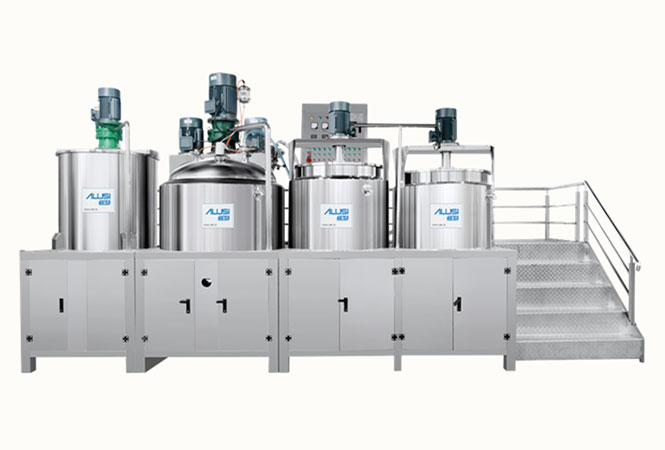
To understand the value of an emulsifying machine, one must first understand the enemy: immiscibility. Oil and water do not mix naturally due to interfacial tension. Traditional agitation merely forces them together temporarily, resulting in coarse, unstable droplets that quickly coalesce .
The magic of an industrial emulsifier lies in its rotor-stator design. Unlike simple propellers that stir, an emulsifying machine generates intense mechanical and hydraulic shear. The rotor rotates at high speeds, drawing materials into the rotor and forcing them through a precision-milled stator screen.
This process creates three distinct forces:
The result is the reduction of droplet size to the micron or even sub-micron level, creating a stable emulsion that can sit on a shelf for months without separation .
While rotor-stator homogenizers dominate the market, the science of emulsification is evolving. Ultrasonic emulsification is gaining traction in niche applications. This method uses high-intensity sound waves to generate acoustic cavitation .
Research indicates that high-intensity ultrasound (HIU) is particularly effective at improving the emulsifying properties of natural ingredients like proteins and polysaccharides. For manufacturers focused on “clean label” products—replacing synthetic surfactants with plant-based proteins—ultrasonic emulsifying machines offer a way to unlock the functional potential of these natural stabilizers without chemical modification .
For procurement managers, the emulsifying machine is not a cost center; it is a profit protector. Inconsistent product quality leads to brand erosion and waste. Emulsifying machines eliminate the variability inherent in human operation or low-tech mixing .
Consider the production of peanut butter. A traditional grind might leave particle sizes varying wildly, leading to a gritty mouthfeel and rapid oil separation. An emulsifying machine equipped with advanced grinding mechanisms ensures that every peanut particle is ground to a uniform size. The oil phase is evenly distributed, preventing the unsightly oil layer that forms on top of natural butters .
This consistency is even more critical in pharmaceuticals, where the distribution of an Active Pharmaceutical Ingredient (API) within a cream determines dosage accuracy. An improperly emulsified topical cream could deliver a sub-therapeutic dose to one area and a potentially irritating dose to another.
Stability is directly linked to droplet size. The smaller the droplet, the more resistant the emulsion is to creaming, flocculation, and coalescence. By achieving droplet sizes below 1 micron, high-shear emulsifying machines create a kinetic barrier to separation .
Furthermore, by creating a stable emulsion, the machine reduces the need for excessive artificial stabilizers and thickeners. This not only cuts raw material costs but also caters to the consumer demand for shorter, more natural ingredient lists .
The modern market demands innovation. Food scientists and cosmetic chemists are constantly tasked with creating textures that were previously impossible. The emulsifying machine is the gateway to this innovation.
The surge in plant-based diets has created a massive demand for alternatives to milk, cream, and cheese. However, replicating the rich mouthfeel of dairy fat using plants like oats, almonds, or soy is a significant challenge.
Emulsifying machines enable manufacturers to use plant-based fats more effectively. By creating a fine, stable emulsion, they allow water and oil to coexist in a creamy suspension without relying on dairy proteins. This not only meets vegan dietary requirements but also significantly reduces the carbon footprint associated with animal agriculture .
Beyond texture, emulsifiers are tools for flavor delivery. Advanced emulsification techniques allow for flavor encapsulation. By creating water-in-oil-in-water (W/O/W) double emulsions, manufacturers can trap volatile flavors or nutrients inside a protective shell.
This means a burst of flavor upon consumption that was previously lost during processing or storage. Emulsifying mixer machines are the only equipment capable of consistently producing these complex multi-phase emulsions at scale .
In an era of rising energy costs and stringent environmental regulations, the mechanical efficiency of production equipment is under scrutiny. Emulsifying machines offer distinct advantages over legacy systems like colloid mills or high-pressure homogenizers.
Studies comparing emulsification technologies have shown that ultrasonic and high-shear rotor-stator systems are often more energy-efficient than traditional high-pressure homogenizers for specific applications . They achieve the desired droplet size in a single pass or shorter residence time, lowering electricity consumption per batch.
Additionally, the precision of these machines reduces material waste. Because the process is controlled and repeatable, there are fewer “off-spec” batches that need to be discarded or reworked. This directly impacts the bottom line and supports corporate sustainability goals .
For facilities producing food or pharmaceuticals, contamination is a catastrophic risk. Modern emulsifying machines are engineered with hygienic design principles. They feature polished internal surfaces, no dead legs where bacteria can grow, and Clean-in-Place (CIP) capabilities.
This design allows for thorough cleaning and sanitization without disassembling the machine, drastically reducing downtime between product changeovers and ensuring compliance with strict food safety regulations like the FDA or FSSC 22000 .
Investing in an emulsifier is a capital decision. Choosing the wrong technology can bottleneck production or limit future product development.
The choice between a batch and inline emulsifying machine depends on your scale and process flow.
Not all emulsifiers handle all materials. High-viscosity pastes (like mayonnaise or ointments) require different rotor geometries than low-viscosity fluids (like milk). When evaluating a machine, it is crucial to conduct a trial with your actual product to see how the machine handles the rheology. Does it create a vortex? Does it heat the product too much? These are factors that specifications alone cannot tell you .
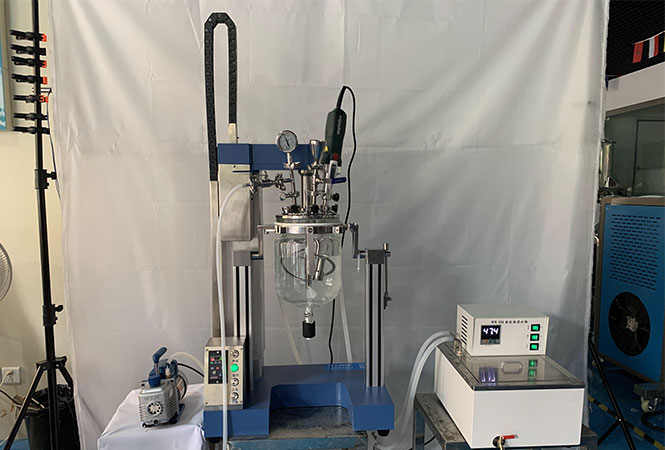
The emulsifying machine is the silent guardian of product quality. It bridges the gap between the laboratory beaker and the supermarket shelf, turning a scientific principle into a sensory experience. Whether you are scaling up a new beverage, improving the sustainability of your dairy line, or ensuring the efficacy of a cosmetic, the decision to invest in advanced emulsification technology is a decision to invest in your product’s future.
If you are facing challenges with product stability, texture, or production scalability, we encourage you to reach out for a technical consultation. Our experts can help you select the right emulsifying solution tailored to your specific formulation needs.
FAQ: Emulsifying Machines
Q: What is the difference between a homogenizer and an emulsifying machine?
A: While the terms are often used interchangeably, a homogenizer is a broad category of equipment used to make a mixture uniform. An emulsifying machine is a specific type of high-shear homogenizer designed specifically to create stable emulsions by dispersing one liquid into another immiscible liquid.
Q: Can an emulsifying machine handle high-viscosity materials like ointments?
A: Yes, but you must select the correct model. For high-viscosity pastes, machines with a single-stage or dual-stage rotor-stator design and stronger motors are required to overcome the resistance and ensure proper flow through the shear gap .
Q: How does emulsification contribute to sustainability?
A: Emulsification contributes to sustainability in two key ways. First, it allows for the use of plant-based ingredients as replacements for animal-derived ones. Second, it improves production efficiency by reducing energy consumption and minimizing product waste due to failed batches .
Q: What maintenance is required for an industrial emulsifier?
A: Primary maintenance includes regular inspection of the rotor and stator for wear (as the tight tolerances are critical for performance), lubrication of seals, and ensuring the CIP system is functioning correctly to prevent buildup.

Contact Us