Home • Comprehensive Guide to Food Emulsifier Machines: Selecting the Right Equipment to Enhance Product Quality and Production Capacity
Comprehensive Guide to Food Emulsifier Machines: Selecting the Right Equipment to Enhance Product Quality and Production Capacity
Ailusi
2026-02-02
76
In the food industry, emulsification technology is a critical process that determines the texture, stability, and mouthfeel of numerous products. The food emulsifier machine, as the core equipment enabling this process, directly impacts production efficiency and the final product’s market competitiveness. This article provides an in-depth exploration of the technical principles, type selection, application scenarios, and key purchasing considerations for food emulsifier machines, offering comprehensive decision-making references for food manufacturing enterprises.
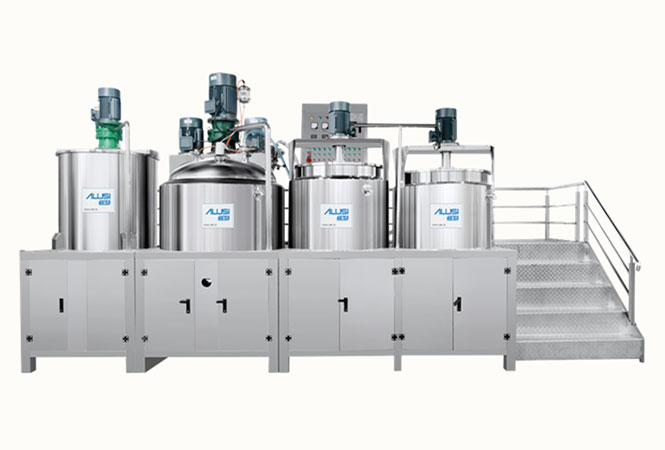
Toothpaste Mixer
What is a Food Emulsifier Machine? Understanding the Core Equipment of Emulsification
The Crucial Role of Emulsification in Food Production
Emulsification is the process of uniformly mixing two inherently immiscible liquids (typically oil and water) to form a stable, dispersed system. In the food industry, emulsification technology is widely applied in:
Dairy products (cream, ice cream, cheese)
Condiments (salad dressing, mayonnaise, sauces)
Bakery products (cake batter, fillings)
Beverages (dairy drinks, protein beverages)
Meat products (sausages, meat emulsions)
Food emulsifier machines utilize mechanical shear, impact, and cavitation effects to break the dispersed phase into minute droplets and uniformly disperse them within the continuous phase, forming a stable emulsion. This process not only affects the product’s appearance and texture but is also crucial for its shelf life and sensory consistency.
The Fundamental Difference Between Food Emulsifiers and Traditional Mixing Equipment
Many food producers often confuse emulsifiers with standard mixing equipment. In reality, there are significant differences in their principles and outcomes:
Traditional Mixing Equipment primarily creates vortices through rotation, achieving macro-mixing. However, its ability to disperse immiscible liquids is limited and cannot achieve true emulsification.
Professional Food Emulsifier Machines generate intense mechanical action within a high-shear force field, capable of breaking down droplets to the micron or even nanometer level, forming genuinely stable emulsions. This difference is directly reflected in product quality—products made with professional emulsification equipment are more stable, have a smoother texture, and possess a longer shelf life.
Analysis of Core Technologies in Food Emulsifiers: How to Achieve Efficient Emulsification
Working Principles and Advantages of High-Shear Emulsifier Machines
High-shear emulsifiers are currently the most widely used type of emulsification equipment. Their core working principle is based on:
Rotor-Stator System: A high-speed rotating rotor and a precisely designed stator form a narrow gap (typically 0.2-0.5mm). Material passing through this gap experiences extremely high shear rates (up to 10,000-40,000 s⁻¹).
Triple Composite Action:
Shearing Action: Powerful shear forces generated by the relative motion between the rotor and stator.
Impact Action: Material is hurled at high speed against the stator wall, causing impact and breakdown.
Cavitation Effect: Localized low-pressure zones form cavitation bubbles, whose collapse generates implosive forces.
Circulation Emulsification Mode: Equipment is typically designed for batch or in-line operation, ensuring uniformity through multiple circulation passes.
Technical Advantages:
Can control emulsion droplet size within the 2-20 micron range.
Short processing times, leading to high production efficiency.
Wide adaptability to viscosity ranges (up to 50,000 cP).
Good temperature rise control, suitable for heat-sensitive materials.
High-Pressure Homogenization Technology and Its Application Scenarios
High-pressure homogenizers are another important category of emulsification equipment, particularly suitable for products requiring ultra-fine emulsion droplets:
Working Principle: Material is forced under high pressure (up to 1500 bar) through a specially designed homogenization valve, experiencing a sudden pressure drop, high-velocity impact, and cavitation effects, resulting in ultra-fine emulsification.
Technical Characteristics:
Emulsion droplet size can reach 0.1-2 microns, enabling nano-scale emulsions.
High processing capacity, suitable for continuous production.
Especially suitable for fine emulsification of high-viscosity materials.
Relatively higher capital investment and operating costs.
Typical Applications:
Stabilization of dairy beverages.
Pulp micronization in fruit juices.
Nano-encapsulation of functional ingredients.
Production of high-end condiments.
How to Choose the Right Food Emulsifier Machine: A Professional Purchasing Guide
Determining Emulsifier Parameters Based on Product Characteristics
When selecting a food emulsifier machine, it is essential to thoroughly consider product characteristics and process requirements:
1. Material Property Analysis
Viscosity Range: Materials from low viscosity (<1,000 cP) to high viscosity (>10,000 cP) require different types of emulsifying heads.
Remote diagnostic technical support for quick problem resolution.
3. Data Integration and Traceability
Integration with factory MES/ERP systems.
Complete production data logging to meet food safety traceability requirements.
Real-time analysis of energy consumption and production efficiency.
Development Trends in Multi-Functional Combined Emulsification Equipment
To adapt to the trend of small-batch, multi-variety production in the food industry, multi-functional combined emulsification equipment is becoming a new trend:
Modular Design
Interchangeable emulsifier head modules to adapt to different process needs.
Expandable add-on modules for heating/cooling, vacuum, homogenization, etc.
Quick-changeover systems to reduce product switchover time.
Versatile Machine Configurations
Integrated design combining emulsification, mixing, dispersion, heating, and cooling.
Capability to handle various materials from low to high viscosity.
Saves on equipment investment and factory floor space.
Energy-Efficient and Eco-Friendly Design
High-efficiency motors and drive systems to reduce energy consumption.
CIP/SIP systems to minimize cleaning water and chemical usage.
Noise control technology to improve the working environment.
Practical Operation Tips and Maintenance Strategies
Operational Best Practices for Optimizing Emulsification Processes
Correct operational methods and process optimization can significantly improve emulsification results and equipment efficiency:
Pre-Mixing Strategy
For oil-water two-phase systems, it is advisable to first dissolve aqueous and oil phase components separately.
Employ a suitable pre-mixing sequence, such as slowly adding the oil phase to the aqueous phase.
Control addition speed to avoid local concentration peaks.
Temperature Control Techniques
The emulsification process typically generates heat; pre-cooling materials is often necessary.
Staged Emulsification: Perform coarse emulsification first, cool, then proceed with fine emulsification.
Utilize equipment jacket systems for precise process temperature control.
Process Parameter Optimization
Determine the optimal combination of rotor speed and emulsification time.
Optimize the number of circulation passes: typically 3-5 passes are needed to achieve stable particle size.
Adjust parameters in real-time based on material changes.
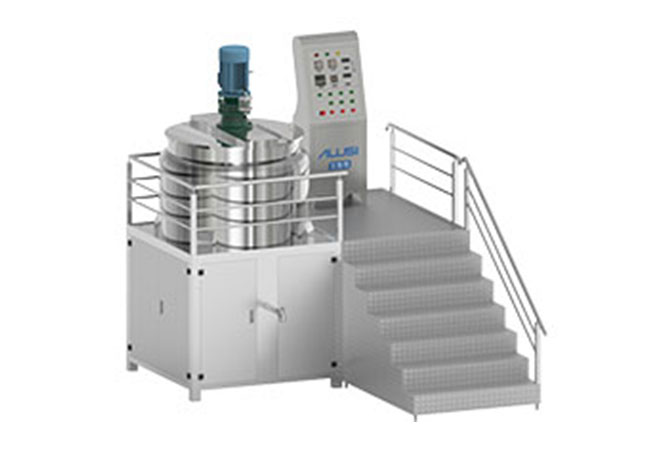
Emulsifier Homogenizer
Professional Maintenance Plans to Extend Equipment Lifespan
Proper maintenance can significantly extend equipment service life and reduce operational costs:
Routine Maintenance Points
Thorough cleaning after each use to prevent material residue.
Check the cooling system of mechanical seals for normal operation.
Regularly inspect emulsifying head wear and replace promptly.
Scheduled Maintenance Plan
Monthly inspection of bearing lubrication.
Quarterly check of drive system alignment.
Annual comprehensive overhaul and replacement of wear parts.
Fault Warning and Handling
Pay attention to abnormal noises and vibrations; investigate causes promptly.
Monitor motor current changes and address anomalies immediately.
Establish equipment operation records to track performance trends.