
Products
In modern manufacturing—particularly in industries such as cosmetics, pharmaceuticals, food, and specialty chemicals—achieving high-quality, stable emulsions is a critical challenge. A vacuum emulsifying mixer, like the ones engineered by Ailusi Mixer, has emerged as a powerful solution. These advanced machines combine precise mixing, homogenizing, heating, cooling, and deaeration in a single unit. Below, we explore the key advantages of integrating a vacuum emulsifying mixer in your production process.
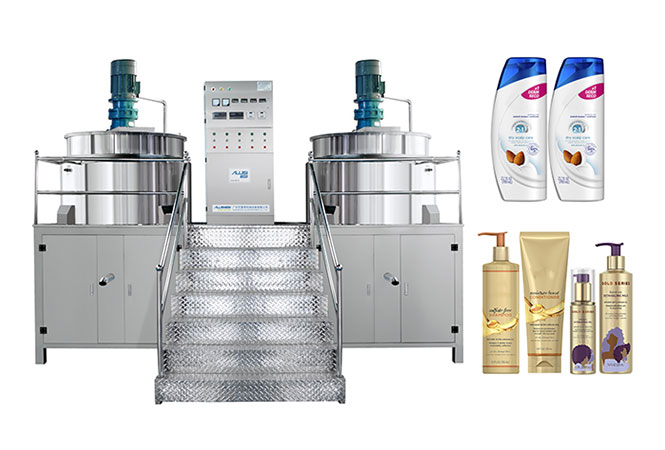
One of the most compelling advantages of using a vacuum emulsifying mixer is the enhanced uniformity and stability of the final product. By operating under vacuum, the mixer effectively removes entrapped air bubbles during emulsification, preventing oxidation and creating a denser, smoother, more consistent emulsion.
In Ailusi Mixers, high-speed homogenizing rotors and shearing heads are used to finely disperse droplets down to micron-level sizes. This fine emulsification improves texture, reduces the risk of phase separation, and ensures a stable, long-lasting product — especially critical for creams, lotions, gels, and other viscous formulations.
Working under vacuum brings another huge benefit: deaeration. The vacuum environment removes not just air bubbles but also volatile gases, which can otherwise lead to oxidation, degradation, or discoloration of sensitive ingredients.
Eliminating oxidation is especially important when dealing with heat- or oxygen-sensitive actives (such as vitamins, fragrances, or natural extracts), helping to preserve their functionality and potency.
Traditional production often requires multiple steps—pre-mixing, heating, homogenizing, cooling, and deaeration—in separate vessels. A vacuum emulsifying mixer consolidates all these functions into one system. Ailusi’s machines integrate high-shear mixing, low-speed stirring, heating and cooling jackets, and vacuum defoaming in a single tank.
This consolidation reduces production time (no need to transfer between vessels), limits material loss, and minimizes contamination risk. The result is greater efficiency and higher throughput, which can significantly lower costs.
Ailusi Mixer’s vacuum emulsifying systems come with advanced control systems, including PLC (programmable logic controller) or touch-screen interfaces.
With these controls, operators can precisely set and monitor parameters like mixing speed, vacuum level, homogenization time, and temperature. The ability to store and run “recipes” ensures high reproducibility and reduces batch-to-batch variability.
This automation not only improves consistency, but also reduces reliance on manual intervention, lowering the risk of operator error and improving safety.
A vacuum emulsifying mixer can be adapted to different batch sizes depending on the production stage: small-scale lab mixers for R&D, or large industrial-scale mixers for mass production. Ailusi offers both “mini” vacuum mixers for small-batch production or lab work and heavy-duty industrial vacuum emulsifier homogenizers for full-scale operations.
Moreover, the company provides customized mixers, tailoring capacity (20–10,000 L), motor power, homogenizing speed, and material (e.g., stainless steel SUS304 / SUS316) to suit client requirements. This flexibility enables manufacturers to scale as their business grows, or to adapt the machine for different product lines without replacing the entire system.
Because the vacuum emulsifying mixer integrates multiple processing steps, it often leads to lower energy consumption compared to using separate pieces of equipment. Fewer vessel transfers and reduced mixing time contribute to lower utility usage. Ailusi also designs their mixers with energy-efficient motors and optimized components to minimize power draw.
In addition, the high efficiency of homogenization shortens processing cycles, which improves productivity and reduces operational costs. The vacuum process also helps minimize raw material waste, since there’s less frothing and no need to overfill to compensate for air loss.
For industries like pharmaceuticals and cosmetics, hygiene is non-negotiable. Ailusi’s vacuum emulsifying mixers are made from sanitary-grade stainless steel and often include CIP (Clean-In-Place) systems, making them easy to clean and maintain.
The polished vessel surface, sealed lids, and hygienic design help reduce contamination risk and support compliance with GMP (Good Manufacturing Practice) standards. Such designs also simplify validation and documentation, which are critical in regulated industries.
Not all mixing technologies are gentle on sensitive ingredients. Compared to high-pressure homogenizers, vacuum emulsifying mixers generally generate lower shear forces, which means less stress on heat-sensitive or shear-sensitive components (like proteins, enzymes, or certain actives).
This gentle yet effective mixing ensures that delicate ingredients retain their functional activity and structural integrity, translating to better product performance and potency.
One of the greatest strengths of vacuum emulsifying mixers is their broad applicability. These machines are used in:
Because of this versatility, companies with broader product portfolios can use the same mixing platform to develop, test, and produce a variety of products.
High-quality vacuum emulsifying mixers are built for durability. Ailusi’s machines use robust materials (such as SUS 304/316 stainless steel), strong motor systems, and precision-engineered components.
The long service life, combined with the process efficiency gains, translates into a strong return on investment. Reduced maintenance, fewer reworks, and consistent batch quality all contribute to cost savings over the machine’s lifecycle.
Adopting a vacuum emulsifying mixer—especially one from a specialist OEM like Ailusi Mixer—brings a wealth of advantages to modern production processes. From superior emulsion stability, air removal, and ingredient protection, to streamlined operations, enhanced hygiene, and automation, these mixers are purpose-built to meet demanding industrial needs.
Whether you’re in cosmetics, pharmaceuticals, food, or specialty chemicals, leveraging a vacuum emulsifying mixer can elevate the quality of your products, reduce production risk, and improve your bottom line. For manufacturers looking to invest in reliable, customizable, and efficient mixing solutions, integrating a vacuum emulsifier from Ailusi could be a game-changer.

Contact Us