
Products
The vacuum emulsifying machine represents one of the most significant technological advancements in mixing and homogenization equipment over the past three decades. These sophisticated systems have transformed production processes across cosmetics, pharmaceuticals, food, and chemical industries by enabling the creation of stable, fine-textured emulsions with extended shelf life and superior quality. Unlike conventional mixing equipment, vacuum emulsifiers operate under controlled atmospheric conditions, preventing oxidation, eliminating air bubbles, and ensuring hygienic processing—factors critical to product integrity and consumer safety.
As global demand for premium emulsion-based products continues to surge, understanding vacuum emulsification technology has become essential for manufacturers seeking competitive advantage. This comprehensive guide explores the engineering principles, operational benefits, and strategic considerations that define high-performance vacuum emulsifying systems, providing actionable insights for businesses investing in production capabilities.
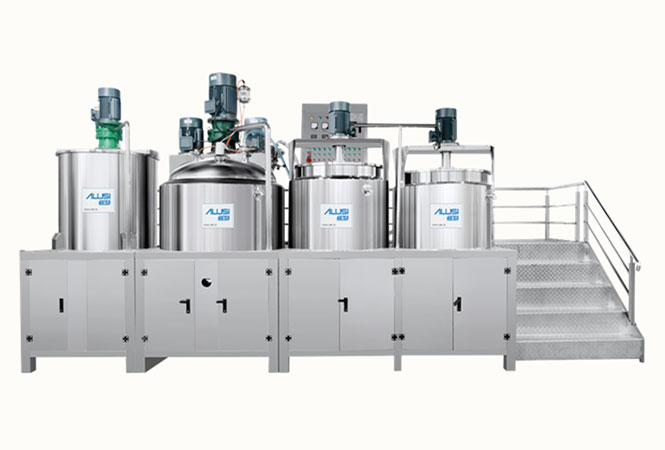
At its fundamental level, emulsification is the process of dispersing one immiscible liquid into another, typically oil into water or vice versa, to create a stable mixture. Conventional methods rely on mechanical shear force alone, often resulting in unstable emulsions with large droplet sizes that eventually separate. Vacuum emulsifying machines elevate this process by introducing three simultaneous actions: high-shear mixing, homogenization, and deaeration under negative pressure.
The vacuum environment serves multiple critical functions. First, it removes air from the mixing vessel before and during processing, preventing oxidation of sensitive ingredients—particularly important for vitamin-rich cosmetics or oxygen-sensitive pharmaceuticals. Second, the absence of atmospheric pressure allows for the creation of finer droplets during the homogenization phase, often reaching particle sizes below 1 micron. This micronization occurs because vacuum conditions lower the resistance to droplet division, enabling the shear mechanism to work more efficiently. Third, the continuous deaeration eliminates microscopic air bubbles that would otherwise become nucleation points for bacterial growth or cause aesthetic defects in transparent products.
A standard vacuum emulsifier comprises several synchronized subsystems that work in concert to achieve optimal results. The primary vessel, typically constructed from 316L stainless steel for corrosion resistance and cleanability, features a dual-layered design with an integral heating/cooling jacket. This allows precise temperature control during different processing phases—heating for melting solid ingredients, and rapid cooling to stabilize the emulsion structure.
The heart of the system is the mixing assembly, which usually incorporates a three-part mechanism: a slow-anchor stirrer that sweeps the vessel walls to prevent material buildup, a high-shear disperser that imparts intense localized energy to break down droplets, and a homogenizer that further refines particle size distribution. Advanced models include programmable logic controllers (PLCs) that automate sequencing, vacuum levels, temperature ramps, and shear rates based on product-specific recipes. These digital controls not only ensure batch consistency but also document all process parameters for quality assurance and regulatory compliance.
The most significant benefit of vacuum emulsification technology is the dramatic improvement in product stability. By eliminating air throughout the process, manufacturers prevent oxidative degradation—the primary cause of rancidity in lipid-containing products and efficacy loss in active pharmaceutical ingredients. Studies across multiple industries have demonstrated that vacuum-processed emulsions maintain their intended properties 40-60% longer than those produced with atmospheric mixing equipment.
This stability derives from both physical and chemical factors. Physically, the ultra-fine droplet size distribution (often 0.5-5 microns) creates a larger total surface area that requires more energy for droplets to coalesce and separate. The absence of air bubbles removes potential weak points in the emulsion matrix. Chemically, protecting oxygen-sensitive compounds like retinoids, essential oils, or certain preservatives maintains their effectiveness throughout the product’s lifecycle. For manufacturers, this translates to reduced returns, fewer preservatives needed, and stronger brand reputation through consistent product performance.
Beyond stability, vacuum emulsifying machines produce visibly and tactilely superior products. The combination of vacuum and high-shear homogenization creates exceptionally smooth textures that consumers associate with premium quality—a critical differentiator in crowded markets like skincare and haircare. This refined texture isn’t merely cosmetic; in pharmaceutical creams, it affects drug absorption rates, while in food products, it influences flavor release and mouthfeel.
The vacuum environment also enables processing at lower temperatures than atmospheric methods. Heat-sensitive ingredients like enzymes, probiotics, or certain polymers can be incorporated without degradation. Additionally, the deaeration function eliminates the need for separate de-foaming steps, streamlining production. For colored products, vacuum processing prevents shade variations caused by microscopic air bubbles that scatter light differently. These combined advantages allow manufacturers to develop products with enhanced functional and sensory characteristics that competitors using conventional equipment cannot easily replicate.
The vacuum system represents the defining component that separates basic emulsifiers from true vacuum emulsifying machines. Industrial-grade systems employ liquid ring vacuum pumps or dry screw vacuum pumps capable of achieving vacuum levels between 0.05 and 0.08 bar absolute pressure. The choice between these technologies involves trade-offs: liquid ring pumps offer lower maintenance but require water treatment, while dry screw pumps provide oil-free operation but have higher initial costs.
Efficient vacuum systems incorporate multiple design features to optimize performance. Condensation traps prevent vapor from entering the vacuum pump, maintaining its efficiency and preventing contamination. Vacuum sensors with feedback loops automatically adjust pump operation to maintain the precise vacuum level required for each processing phase. Quick-release vacuum break valves allow for rapid return to atmospheric pressure when adding ingredients during processing. For sanitary applications, the vacuum lines should be fully drainable and cleanable-in-place (CIP) to prevent microbial growth in stagnant areas.
Precise thermal management is crucial throughout the emulsification process. Initial heating melts solid fats, waxes, or gelling agents, typically requiring temperatures between 70-90°C. After homogenization under vacuum, rapid cooling to 25-40°C stabilizes the emulsion structure before adding heat-sensitive actives or fragrances. High-performance vacuum emulsifiers employ counter-current heat exchangers in their jacketed vessels, with temperature control accuracy within ±1°C.
Advanced systems feature multi-zone temperature control, where different sections of the vessel wall maintain slightly different temperatures to prevent localized overheating or cooling. The heating medium (usually water or thermal oil) circulates through these zones independently, responding to temperature sensors at multiple points within the product mass rather than just at the vessel wall. This sophisticated approach prevents the “hot spots” that can degrade sensitive compounds and ensures uniform product quality throughout the batch, particularly important for viscous formulations that transfer heat poorly.
Choosing an appropriate vacuum emulsifying machine requires careful analysis of both current needs and future growth. Laboratory-scale units (5-50 liters) suit R&D and small-batch production, while pilot-scale machines (50-500 liters) bridge development and full production. Industrial systems range from 500 to 5,000 liters for most applications, with specialized units reaching 10,000 liters for high-volume commodities. Beyond simple volume matching, manufacturers must consider vessel geometry—wider, shallower vessels provide more surface area for heating/cooling but may require different agitation designs than tall, narrow vessels.
Scalability deserves particular attention. The most cost-effective approach often involves selecting equipment that uses the same shear rates, vacuum levels, and temperature profiles across different sizes—allowing direct scale-up from laboratory to production without reformulation. Modular designs that permit later expansion (adding larger vacuum pumps, additional heating/cooling capacity, or automation upgrades) protect investments as production volumes increase. For multiproduct facilities, quick-change homogenizer heads and CIP systems reduce changeover time between different formulations.
The construction materials of a vacuum emulsifier must withstand not only the chemical properties of the products but also rigorous cleaning and sanitization protocols. Pharmaceutical and cosmetic applications typically require 316L stainless steel with Ra≤0.4µm surface finish on all product-contact surfaces. Food applications may necessitate electropolished finishes that prevent bacterial adhesion. For corrosive chemical applications, Hastelloy or titanium coatings provide additional protection, though at significantly higher cost.
Sanitary design principles extend beyond material selection to encompass all aspects of construction. Dead legs in piping must be eliminated (with L/D ratios ≤2 for pharmaceutical applications), all joints should be orbital welded and polished, and seals must use FDA-approved materials that withstand both product exposure and cleaning chemicals. Modern sanitary vacuum emulsifying machines often incorporate self-draining pitched lines, CIP spray balls that cover 100% of internal surfaces, and sterilization-in-place (SIP) capabilities using pure steam. These features reduce contamination risks while minimizing labor-intensive manual cleaning between batches.
Maximizing the benefits of a vacuum emulsifying machine requires tailoring process parameters to specific formulation characteristics. Oil-in-water emulsions typically require higher shear rates during the initial dispersion phase (15-25 m/s tip speed) followed by moderate homogenization (5-15 m/s), while water-in-oil systems often benefit from reversed sequences. Viscous products may need increased sweep agitation to ensure uniform heat transfer, while low-viscosity formulations might require baffles to prevent vortex formation that degrades vacuum efficiency.
The timing of vacuum application proves particularly critical. Three-stage vacuum processes often yield best results: initial vacuum after heating to remove dissolved gases, partial vacuum release for adding powder phases (to prevent “dusting” into vacuum lines), followed by full vacuum during homogenization and cooling. Temperature profiles must coordinate with these stages—maintaining heat during initial vacuum to drive off moisture from raw materials, then precisely controlling cooling rates to prevent thermal shock that can break emulsions. Documenting these parameter combinations for each product creates valuable institutional knowledge and ensures batch-to-batch consistency.
Like all precision equipment, vacuum emulsifying machines require systematic maintenance to maintain performance and extend service life. Daily inspections should verify seal integrity (particularly around the main lid and homogenizer shaft), check for abnormal vibrations indicating bearing wear, and confirm vacuum pump oil levels and clarity. Monthly maintenance includes calibrating temperature and pressure sensors, inspecting homogenizer valve seats for wear, and verifying the accuracy of weight measurement systems if incorporated.
Quarterly comprehensive maintenance should address the mechanical seals (replacing them preventively based on operating hours rather than waiting for failure), inspecting the heating/cooling jacket for corrosion or scaling, and performing vacuum decay tests to identify leaks before they impact product quality. Annual servicing by qualified technicians should include vibration analysis of rotating components, recalibration of all control systems, and replacement of wear components based on the manufacturer’s recommendations. These proactive measures prevent unexpected downtime—which can cost thousands per hour in lost production—and maintain the precise tolerances necessary for consistent emulsion quality.
Investing in a vacuum emulsifying machine represents more than just purchasing production equipment—it’s a strategic decision to elevate product quality, improve manufacturing efficiency, and gain competitive advantage in increasingly demanding markets. The technology’s ability to produce stable, finely-textured emulsions with extended shelf life addresses multiple challenges facing modern manufacturers: consumer demand for natural preservative-free products, regulatory requirements for documented process controls, and economic pressures to reduce waste and rework.
As emulsion science continues advancing, next-generation vacuum emulsifiers incorporate even more sophisticated features: in-line particle size analyzers for real-time quality control, AI-driven process optimization that automatically adjusts parameters based on raw material variations, and hybrid systems that integrate emulsification with subsequent filling and packaging operations. Manufacturers who master this technology today position themselves to leverage these future advancements, creating sustainable differentiation in their markets.
For businesses evaluating vacuum emulsifying machines, the key considerations extend beyond specifications and price to encompass the supplier’s process knowledge, support capabilities, and understanding of your specific application challenges. The most successful implementations partner equipment manufacturers with production teams from the planning stage through validation and ongoing optimization, creating systems precisely tailored to deliver exceptional products efficiently and consistently for years to come.

Contact Us