
Products
Walk into any cosmetics, pharmaceutical, or food processing facility, and you will find one piece of equipment that truly defines product quality—the emulsifying machine. Yet despite its critical role, this workhorse of modern manufacturing remains perhaps the most misunderstood investment on the production floor.
For plant managers facing capacity expansions or quality upgrades, the emulsifying machine selection process often becomes a confusing maze of technical specifications, competing claims, and budget constraints. Get it right, and your product consistency soars while production costs drop. Get it wrong, and you are looking at reformulation headaches, rejected batches, and capital equipment that underperforms for years.
This guide cuts through the marketing jargon to deliver what decision-makers actually need: practical insights into emulsification technology, honest evaluation criteria, and a framework for matching equipment to your specific production reality.
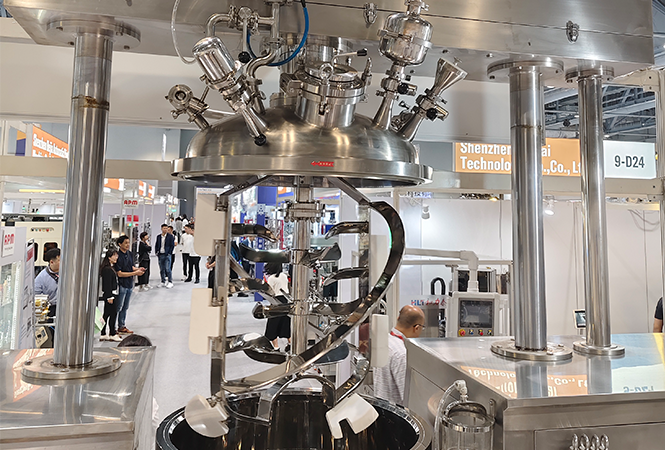
Before diving into specifications and brands, we need absolute clarity on the fundamental job this equipment performs. An emulsifying machine creates stable mixtures from liquids that naturally want to separate—oil and water being the classic example .
When you simply stir oil into water, you get temporary dispersion at best. Within minutes, the two phases begin separating because of interfacial tension—the natural resistance between immiscible liquids . An industrial emulsifying machine overcomes this physics problem by applying intense mechanical energy to break the dispersed phase into microscopic droplets.
The key insight here is that stability depends entirely on droplet size. Smaller droplets mean more surface area, which means emulsifiers can more effectively coat each droplet and prevent coalescence . Quality emulsifying machines consistently achieve droplet sizes in the micron or even sub-micron range, creating products that remain stable for months on the shelf.
Here is what experienced production managers understand that newcomers often miss: the emulsifying machine’s primary job is not just creating good emulsions—it is creating identical emulsions every single time. Consumer expectations have never been higher. A lotion that feels slightly different from last month’s batch triggers complaints. A sauce with minor texture variations gets returned.
The best emulsifying machines deliver what engineers call “repeatable shear history”—every particle in every batch experiences the same forces for the same duration . This consistency separates equipment that merely works from equipment that builds brands.
At the core of virtually every modern emulsifying machine lies the rotor-stator assembly. Understanding this component’s design variations directly impacts your ability to match equipment to products.
The rotor-stator works through a deceptively simple mechanism: the rotor spins at high speed, drawing material into the workhead and forcing it through the precision gap between rotor and stator teeth . The resulting combination of mechanical shear, hydraulic shear, and turbulence breaks droplets down to target size.
But here is where equipment diverges significantly. Advanced rotor designs feature wedge-shaped blades rather than simple rectangular profiles. These V-shaped or wedge geometries create additional shearing forces on the mixture, resulting in finer reduction of agglomerates and greater mixture uniformity . Similarly, stator openings arranged in V-shaped patterns around the circumference provide enhanced dispersion compared to basic vertical slots.
For production environments handling multiple product lines, variable-frequency drives become essential. The ability to adjust rotor speed lets you optimize shear rates for different formulations without changing tooling.
Production managers face a fundamental choice between single-stage and multi-stage emulsifying machines. Single-stage units process material through one rotor-stator combination, suitable for straightforward emulsions with moderate viscosity.
Multi-stage machines, by contrast, subject material to progressively finer shear gaps. The first stage might handle bulk dispersion, the second stage refines droplet size, and the third stage achieves the final specification. For products requiring nano-emulsion ranges or handling viscosities above 10,000 cP, multi-stage designs are non-negotiable.
The trade-off involves cleaning complexity and energy consumption. Multi-stage machines require more thorough cleaning protocols and draw higher power. But for facilities producing premium cosmetics or pharmaceutical creams, the quality outcomes justify these considerations.
An emulsifying machine does not operate in isolation. The conditions inside the mixing vessel dramatically influence final product quality, often more than buyers anticipate.
Air entrapment ruins emulsions. Microscopic bubbles create oxidation pathways, degrade sensitive ingredients, and produce unsightly surface defects in finished products . Yet many production facilities continue processing under atmospheric conditions, accepting quality limitations as inevitable.
Vacuum emulsifying machines solve this by evacuating air before and during processing. Operating at vacuum levels down to -0.09 MPa or 29.5″Hg, these systems pull trapped air from raw materials and prevent bubble formation during high-shear mixing . The result? Denser products with glossy, bubble-free appearance and extended shelf life.
For pharmaceutical manufacturers, vacuum processing offers an additional benefit: it enables direct suction of powders into the main vessel, eliminating dust hazards and preventing contamination during material transfer.
Temperature control seems basic, yet many emulsifying machines treat it as an afterthought. The reality is that emulsification is profoundly temperature-dependent. Waxes and oils require specific melting temperatures. Heat-sensitive actives demand controlled cooling profiles .
Advanced emulsifying machines address this through multi-layer jacketed construction with pressure ratings up to 50 psig for heating or cooling media . Separate heating and cooling circuits maintain precise temperature control throughout the cycle. The best configurations separate oil and water phases initially, heating them independently in dedicated vessels to optimal temperatures before combining in the main tank.
This thermal precision ensures crystallization occurs correctly and emulsions form under repeatable conditions. For production managers tracking quality metrics, temperature logging capabilities provide audit trails that prove process control to regulators and customers alike.
The emulsifying machine market divides fundamentally between batch and continuous platforms. Each serves distinct production realities, and choosing between them shapes your entire manufacturing approach.
Batch emulsifying machines dominate industries where formulation flexibility matters most. Cosmetics manufacturers running multiple SKUs through the same equipment benefit from batch configuration’s ability to handle varied recipes with quick changeovers .
Modern batch systems offer working volumes from laboratory scale up to 500 liters or more, with the same control architecture scaling across sizes . This scalability proves valuable for companies moving products from development to full production—the same operating parameters that worked in pilot batches translate directly to production-scale equipment.
The downside involves labor intensity and cycle time. Each batch requires loading, processing, unloading, and cleaning before the next begins. For high-volume commodity products, this overhead becomes economically limiting.
Continuous emulsifying machines address high-volume requirements directly. Material flows through the machine constantly, with consistent shear application and no batch-to-batch variation . These systems excel in food processing environments producing dressings, sauces, and dairy products by the ton.
The energy efficiency argument for continuous machines is compelling. Because mixing energy concentrates in a relatively small working area rather than heating an entire tank, power consumption per unit of output drops significantly . For production managers under pressure to reduce operating costs, this efficiency translates directly to bottom-line impact.
Market data confirms the shift toward continuous platforms, with the global emulsifying machine market projected to reach approximately $12.54 billion by 2032, growing at a CAGR of 6.4% .
Emulsifying machines spend their working lives in contact with aggressive chemicals, high temperatures, and constant moisture. Material selection determines whether equipment lasts ten years or twenty.
Equipment brochures routinely mention “stainless steel construction” without specifying grade—a distinction that matters enormously for total cost of ownership. SUS 304 stainless steel performs adequately for external cladding and non-contact surfaces. But for product contact areas, SUS 316L is the gold standard .
The “L” in 316L indicates low carbon content, which improves weld integrity and corrosion resistance. This grade withstands the acids, alkalis, and sanitizing agents used in Clean-in-Place (CIP) protocols without pitting or stress corrosion. For pharmaceutical and food applications where cleaning validation is mandatory, 316L construction is non-negotiable.
Even the right alloy performs poorly if surface finish is inadequate. Quality emulsifying machines feature mirror-polished internal surfaces, typically 300 mesh or higher . This polishing serves two purposes: it prevents product adhesion that wastes material and complicates cleaning, and it eliminates microscopic crevices where bacteria could colonize.
The best machines extend this design philosophy to every product contact point. Hemispherical tank bottoms eliminate dead zones where material stagnates. Flush-mounted valves prevent accumulation points. Hydraulic tank tilting mechanisms enable complete drainage and thorough cleaning access .
For production managers facing regulatory inspections, these details become audit talking points that demonstrate commitment to quality.
Labor costs rise while quality standards tighten. In this environment, emulsifying machine automation has shifted from luxury to necessity.
Modern emulsifying machines integrate Programmable Logic Controllers (PLC) with intuitive human-machine interfaces (HMI) . These systems do far more than start and stop motors. They store digital recipes that automatically control heating profiles, mixing speeds, vacuum levels, and cooling cycles.
The operational impact is dramatic. An operator simply selects a formula from the touchscreen, and the machine executes the entire sequence without manual intervention. This eliminates the human errors that create batch variations—the temperature setpoint that got dialed in slightly wrong, the mixing time that ran a bit long.
Advanced emulsifying machines now offer comprehensive data logging as standard. Every production parameter—temperature curves, motor amperage, vacuum hold times, cooling rates—gets recorded and stored.
For regulated industries, this data provides audit-ready proof of process control. When a customer complaint arises, production managers can reconstruct exactly what happened during that batch, identifying whether equipment performance or raw materials caused the issue.
Beyond compliance, this data enables continuous improvement. Analyzing parameter trends across hundreds of batches reveals opportunities for cycle time reduction or quality enhancement that would otherwise remain invisible.
Purchase price dominates initial procurement conversations, but it represents a fraction of what an emulsifying machine actually costs over its operational lifetime.
High-shear mixing consumes significant power. Machines equipped with variable frequency drives (VFDs) allow operators to match energy input precisely to product requirements rather than running at full throttle for every batch. The energy savings accumulate rapidly, particularly in facilities running multiple shifts.
VFDs also enable gentler processing for shear-sensitive ingredients. Some formulations require intense shear for emulsification but contain polymers or active ingredients that degrade under excessive force. Speed control lets production managers find the sweet spot where quality meets throughput.
The rotor-stator tooling that makes emulsification possible is also a wear item. Over time, even the hardest materials experience dimensional changes that affect shear gap tolerance . Understanding replacement part costs and availability before purchasing prevents unpleasant surprises when tooling eventually needs replacement.
Similarly, shaft seals represent a maintenance critical point. In vacuum machines especially, seal integrity determines whether the system maintains specified vacuum levels. Machines designed with readily accessible, standardized seals reduce downtime when replacement becomes necessary.
For facilities running multiple products, cleaning time directly impacts productive capacity. Emulsifying machines designed for Clean-in-Place (CIP) operation minimize the labor and downtime associated with product changeovers .
Evaluate whether the machine’s cleaning protocols can be validated to your industry’s standards. Pharmaceutical manufacturers need documented evidence that cleaning procedures remove all traces of previous products. Food producers need assurance that allergen cross-contamination cannot occur. Machine design either facilitates this validation or creates obstacles.
After reviewing technical specifications and comparing brands, production managers need a structured approach to final selection.
The emulsifying machine you buy today should serve products you plan to make five years from now. Consider your product development pipeline. Are you moving toward higher-viscosity formulations? Do upcoming products contain shear-sensitive actives? Will batch sizes increase as volumes grow?
Choosing equipment with headroom for future requirements costs marginally more upfront but prevents premature obsolescence. Machines that cannot accommodate evolving product portfolios become expensive anchors rather than productive assets.
Equipment performance depends on vendor support as much as machine design. Investigate the vendor’s parts availability, technical support responsiveness, and installation assistance. Request references from customers in similar industries and applications. Visit operating installations when possible.
The right vendor becomes a long-term partner in your manufacturing success, helping optimize processes and troubleshoot challenges. The wrong vendor disappears after the check clears, leaving you to solve problems alone.
Features like vacuum systems, advanced automation, and premium materials add upfront cost but deliver returns through quality improvement and operating efficiency. Run the numbers on reduced rejection rates, faster batch cycles, and extended shelf life. Often these calculations reveal that the “premium” machine actually delivers lower total cost when properly evaluated.
The versatility of the emulsifying machine is what makes it a cornerstone of so many industries, and technology continues to push the boundaries of what is possible.
The market continues to evolve with several notable trends. Ultrasonic emulsification and high-pressure homogenizers represent alternative technologies gaining traction for specific applications requiring extremely fine droplet sizes .
Equipment manufacturers are increasingly focusing on energy efficiency and integration with broader production lines. The ability to interface seamlessly with downstream equipment like fluidized bed granulators or filling lines has become a significant differentiator .
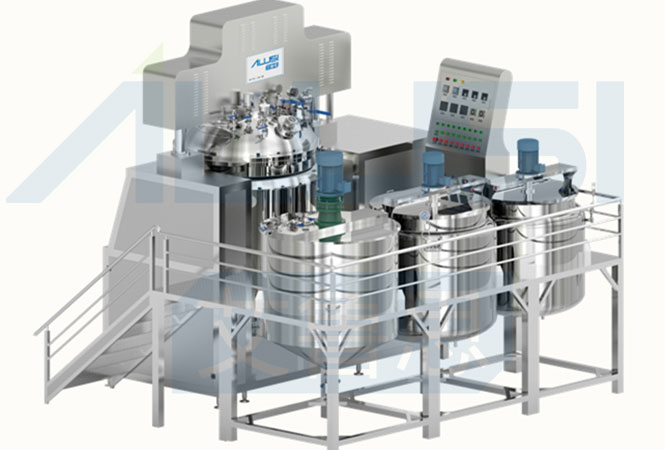
For production managers and plant operators, the emulsifying machine represents far more than a capital expense. It is the technology platform that determines whether your products meet quality specifications consistently, whether your operations run efficiently, and whether your facility can adapt to changing market demands.
The decision deserves the same rigor applied to any strategic investment—thorough needs analysis, careful vendor evaluation, and honest assessment of total cost of ownership. By approaching emulsifying machine selection with this disciplined framework, you position your operation for quality excellence and competitive advantage.
Ready to discuss which emulsifying machine configuration matches your specific production requirements? Contact our engineering team to schedule a consultation. We will help you evaluate your options and select equipment that delivers consistent quality, efficient operation, and lasting value.

Contact Us