
Products
In the competitive landscape of modern manufacturing, product consistency is the invisible thread that connects consumer trust to brand loyalty. When a customer opens a jar of facial cream and finds it perfectly smooth, or squeezes a bottle of mayonnaise with exactly the right consistency, they’re experiencing the result of precision engineering that operates far from their view.

The equipment responsible for this reliability is the emulsifying machine—a sophisticated piece of processing equipment that has evolved from simple mixers into intelligent, multi-functional systems capable of handling everything from delicate pharmaceutical ointments to high-viscosity industrial coatings. As global markets become more demanding and regulatory standards more stringent, understanding the capabilities and selection criteria for these machines has become essential knowledge for production managers, quality assurance professionals, and business owners alike.
According to recent market analysis, the global solid-liquid emulsifying machine market was valued at approximately 8.098 billion RMB in 2025 and is projected to reach 12.54 billion RMB by 2032, growing at a compound annual rate of 6.4% . This growth reflects not just increasing production volumes, but the expanding role of emulsification technology across industries from food and pharmaceuticals to cosmetics and advanced materials.
This comprehensive guide explores the technology, applications, and strategic considerations that will help you make informed decisions about emulsifying equipment for your production needs.
Understanding how emulsifying machines work requires a foundation in the physics of immiscible liquids. When oil and water are combined, they naturally separate because of interfacial tension—the molecular resistance at the boundary between the two phases. Even after intensive stirring, without proper technology, the oil eventually resurfaces .
The heart of every high-shear emulsifying machine is the rotor-stator assembly, a precision-engineered system that transforms electrical energy into mechanical force with remarkable efficiency . The rotor spins at extremely high speeds—typically between 3,000 and 10,000 revolutions per minute, though some specialized units reach 9,000 to 12,000 RPM . This rapid rotation creates a vacuum that draws materials into the mixing head, where they encounter the stationary stator with its precisely machined slots or holes.
What happens next is a cascade of physical forces that break droplets down to microscopic sizes. The material experiences intense hydraulic shear as it passes through the narrow gap between rotor and stator, typically measured in microns. When forced through the stator openings, it undergoes additional mechanical shearing and impact forces. This combination of actions—centrifugal force, hydraulic shear, turbulence, and impact—reduces droplet diameters to the 1-5 micron range, creating emulsions with exceptional stability .
For inviscid liquid-liquid systems, research indicates that the agitator shear rate, rather than energy dissipation, is the dominant mechanism for droplet break-up in rotor-stator devices . This insight has important implications for equipment design and selection, as it suggests that geometry and precision matter as much as raw power.
Emulsions are typically stabilized by emulsifiers—molecules with dual affinity for both water and oil phases. One side of the emulsifier molecule bonds with water (hydrophilic), while the other bonds with oil (lipophilic) . These compounds accumulate at the droplet interfaces, reducing interfacial tension and creating a physical barrier that prevents coalescence.
Modern emulsifying machines accelerate this stabilization process by generating high turbulence that rapidly transports emulsifier molecules to newly formed droplet surfaces . This synergy between mechanical shearing and chemical stabilization is what enables the production of stable emulsions at industrial scales.
Today’s emulsifying machines incorporate multiple technologies that extend far beyond simple mixing. Understanding these features is essential for selecting equipment that meets your specific production requirements.
Vacuum emulsifying machines represent the current standard for high-quality production in cosmetics and pharmaceuticals. By operating under vacuum conditions reaching -0.09 MPa, these systems pull entrained air and dissolved gases from the mixture . This serves multiple purposes:
First, it prevents oxidation that can degrade sensitive active ingredients and natural compounds. Second, it eliminates air bubbles that would otherwise compromise the visual appearance of finished products—creams and lotions emerge with a glossy, bubble-free finish that signals quality to consumers. Third, the vacuum environment facilitates more efficient mixing by removing trapped air pockets that can interfere with droplet formation .
For facilities operating under Good Manufacturing Practices (GMP), the vacuum also prevents contamination by maintaining negative pressure within the vessel, ensuring that no particles escape into the production environment and that nothing enters from outside .
Most industrial emulsifying machines feature sophisticated three-layer tank construction . The inner vessel, typically fabricated from SUS316L stainless steel for product contact, is surrounded by a middle layer through which heating or cooling media circulates, and an outer insulating jacket that maintains thermal uniformity.
This design enables precise temperature control throughout the emulsification process—critical for formulations containing temperature-sensitive ingredients like botanical extracts, active pharmaceutical compounds, or natural proteins. Heating helps melt solid components such as waxes and butters, while cooling solidifies the final emulsion at the desired viscosity . Advanced systems maintain temperature accuracy within ±1 °C, ensuring consistent results batch after batch .
Modern emulsifying systems often incorporate multiple agitation mechanisms within a single vessel. While the high-speed rotor handles droplet size reduction, a slow-speed frame agitator—typically operating at 0-60 RPM—continuously sweeps the vessel walls . This prevents product from baking onto heated surfaces, ensures complete thermal uniformity, and gently folds material back toward the rotor for continuous processing.
This dual-agitation approach preserves energy efficiency while maintaining product quality. The slow-speed scraper, often equipped with PTFE blades that conform to tank contours, eliminates dead zones where unmixed material could accumulate .
For industries where microbial contamination is unacceptable, modern emulsifying machines incorporate Clean-in-Place (CIP) systems that allow thorough sanitization without disassembly . Polished internal surfaces—often finished to 300 mesh or finer—eliminate crevices where bacteria might colonize . All product-contact surfaces feature corrosion-resistant stainless steel construction, with welds ground flush and rounded to prevent accumulation .
These design features aren’t merely convenient—they’re essential for regulatory compliance. Facilities operating under FDA, GMP, or FSSC 22000 standards must demonstrate that their equipment can be effectively cleaned, and integrated CIP systems provide documented, repeatable sanitation cycles.
Different industries impose unique demands on emulsifying equipment, and understanding these requirements is essential for proper machine selection.
The pharmaceutical industry demands the highest standards of precision and documentation. Emulsifying machines used in drug manufacturing must achieve specific particle size distributions to ensure consistent dosing of active ingredients. For topical preparations like ointments and creams, the distribution of the Active Pharmaceutical Ingredient (API) within the base determines therapeutic efficacy—inadequate emulsification could deliver inconsistent dosing .
Cosmetic manufacturers share many of these concerns, with added emphasis on aesthetic qualities. Products like facial creams, serums, and foundations must feel smooth on application and maintain visual appeal throughout their shelf life. The ability to achieve droplet sizes in the sub-micron range—often characterized as nano-emulsions—has opened new possibilities for cosmetic formulations with improved texture and skin penetration .
Food-grade emulsifying machines must accommodate ingredients with diverse origins and properties while meeting stringent food safety standards. Mayonnaise production, perhaps the classic emulsification challenge, requires the stable incorporation of oil droplets into an aqueous phase containing egg yolk as an emulsifier . Salad dressings, sauces, and dairy products present similar challenges at industrial scales.
The viscosity range encountered in food applications varies enormously. Low-viscosity fluids like milk-based beverages require entirely different rotor geometries than high-viscosity pastes like margarine or peanut butter. Modern emulsifying systems accommodate this diversity through interchangeable mixing heads and variable-speed drives .
Beyond foods and personal care products, emulsifying machines serve critical roles in chemical manufacturing. Paints, coatings, adhesives, and printing inks all require the stable dispersion of pigments and binders . High-shear emulsifying machines can replace multiple traditional devices—including sand-grinding machines, ball mills, colloid mills, and three-roller mills—in a single piece of equipment .
This versatility translates to significant capital savings and simplified process flows. For paint manufacturers particularly, emulsifying machines overcome the limitations of traditional equipment: high investment costs, complex process procedures, and inconsistent quality . By combining multiple unit operations in one machine, they shorten process cycles while improving final product quality.
Choosing emulsifying equipment represents a significant capital decision that should be approached systematically.
Product viscosity is often the starting point for equipment selection. Standard emulsifying machines can handle materials up to approximately 10,000 cP effectively, while specialized systems with stronger motors and optimized rotor geometries extend this range to 50,000 cP or higher . For high-viscosity applications, features like dual-agitation and heated vessels become increasingly important.
Shear sensitivity considerations follow. Some ingredients—particularly natural polymers, certain active compounds, and fragile emulsions—can be damaged by excessive shear. For these applications, machines with adjustable speed controls and the ability to precisely control processing time offer important advantages .
Particle size requirements directly influence equipment selection. Standard emulsification achieves droplet sizes in the 1-5 micron range, sufficient for most food and cosmetic applications. Nano-emulsion applications requiring sub-micron droplets may necessitate multiple-pass processing or specialized high-pressure homogenization systems .
The choice between batch and continuous processing depends on production volume and product diversity .
Batch emulsifiers offer maximum flexibility for facilities running multiple formulations with frequent changeovers. They allow precise control over processing parameters for each batch and are available in sizes ranging from laboratory-scale units to production vessels handling hundreds of liters .
Inline emulsifiers, by contrast, excel in high-volume, single-product applications where consistent particle size distribution must be maintained hour after hour. These systems are mounted in pipelines and process product as it flows through, concentrating mixing energy into a small working area for maximum efficiency . The continuous operation eliminates batch-to-batch variation and supports fully automated production lines.
Energy consumption represents a significant component of long-term operating costs. Inline emulsifiers offer inherent efficiency advantages by concentrating mixing energy into a confined space, maximizing the effect on product flow .
Recent academic research comparing continuous emulsification devices has revealed significant performance differences among available technologies. Studies examining cavitation-based devices—including wet mills, Soldo cavitators, Dynaflow cavitators, and vortex-based hydrodynamic cavitation systems—found that vortex-based devices achieved superior droplet size reduction with lower energy consumption . The smallest vortex device exhibited the highest efficiency across the entire energy range tested, generating more interfacial area per unit of energy consumed than any alternative .
These findings provide valuable guidance for manufacturers seeking to optimize both product quality and operating costs. The data and analysis from such studies help predict device performance for desired emulsion characteristics and production capacities .
The emulsifying machine continues to evolve, with emerging technologies offering new capabilities for demanding applications.
Modern emulsifying machines increasingly feature programmable logic controllers (PLC) and touchscreen interfaces that enable precise management of all process parameters . Systems incorporating Siemens controls and Schneider electric components allow operators to switch between manual and automatic modes, store recipes for different products, and maintain complete documentation for quality assurance .
Future developments will likely include predictive maintenance algorithms that monitor rotor-stator wear, closed-loop control systems that adjust parameters in real-time based on in-line particle size measurement, and comprehensive data integration with enterprise resource planning systems.
While rotor-stator machines dominate the market, alternative technologies continue to advance. Ultrasonic emulsification uses high-intensity sound waves to generate acoustic cavitation, producing extremely fine emulsions suitable for specialized applications. Research indicates that vortex-based hydrodynamic cavitation devices offer particular promise for continuous production, achieving excellent droplet size distributions with low energy consumption .
For manufacturers focused on “clean label” products—replacing synthetic surfactants with plant-based alternatives—these emerging technologies may unlock functional potential that conventional emulsifiers cannot achieve.
Increasing regulatory pressure and consumer demand for sustainable production are reshaping equipment requirements. Emulsifying machines contribute to sustainability goals through multiple mechanisms: reduced energy consumption compared to legacy technologies, decreased material waste through precise process control, and support for plant-based formulations that carry lower environmental footprints .
The trend toward “smart, flexible, sustainable” machinery is particularly evident in cosmetics manufacturing, where tightening sustainability regulations worldwide are accelerating equipment upgrades . Manufacturers who invest in modern emulsifying technology position themselves to meet both current requirements and future regulatory developments.
Selecting an emulsifying machine requires balancing multiple factors: product requirements, production volumes, facility constraints, and budget considerations. The most successful investments begin with thorough process analysis and include equipment trials with actual products.
Given the complexity of emulsification and the variety of available technologies, equipment trials with your actual formulations are invaluable. A machine that performs admirably with water-like fluids may struggle with your high-viscosity cream. Conversely, an emulsifier optimized for thick pastes might impart excessive shear to a delicate suspension.
Reputable manufacturers offer testing facilities where you can evaluate equipment with your formulations, measuring particle size distributions, processing times, and final product characteristics before making a purchase commitment . These trials provide data that specifications alone cannot deliver.
The relationship with your equipment supplier extends far beyond the initial purchase. Look for partners who offer comprehensive support: application engineering to optimize your processes, installation assistance, operator training, and responsive service when issues arise.
Suppliers with deep industry experience can help you anticipate future needs and select equipment that will remain viable as your product line evolves. They can also guide you through regulatory validation requirements and documentation needs specific to your industry.
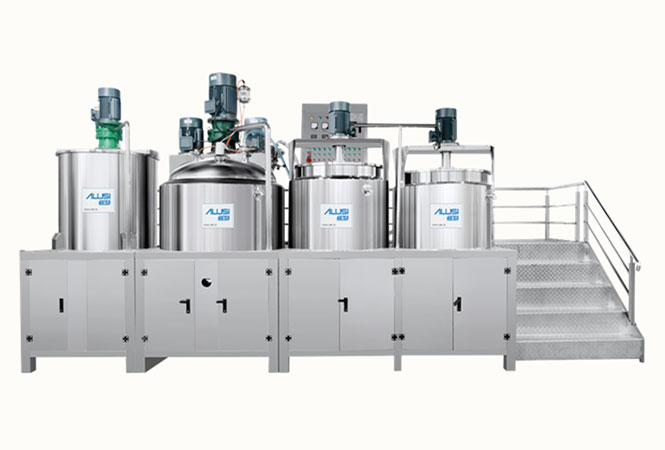
The emulsifying machine has evolved from a simple mixing tool into a strategic asset that directly impacts product quality, manufacturing efficiency, and market competitiveness. Whether you’re producing pharmaceutical ointments where dosing accuracy depends on uniform API distribution, cosmetic creams where texture determines consumer preference, or food products where stability dictates shelf life, your emulsification equipment plays a central role in your success.
As markets become more competitive and regulatory requirements more demanding, the gap between adequate and exceptional emulsification technology grows wider. Manufacturers who invest in well-engineered emulsifying systems—matched to their specific applications, integrated with modern controls, and supported by knowledgeable partners—position themselves to deliver consistent quality while controlling production costs.
The right emulsifying machine doesn’t just mix ingredients; it transforms them into products that build brands, satisfy customers, and drive business growth.
Ready to optimize your emulsification process? Contact our technical team to discuss your specific formulation requirements and production goals. We’ll help you evaluate the options and select the emulsifying system that delivers the quality, consistency, and efficiency your operation demands.

Contact Us