
Products
When it comes to producing luxurious, stable, and market-ready creams, the emulsifier machine for cream stands as the unsung hero of cosmetic and pharmaceutical manufacturing. This sophisticated equipment doesn’t merely mix ingredients—it transforms separate phases into perfectly homogeneous, shelf-stable products that consumers trust. Whether you’re developing a new skincare line, scaling production, or optimizing existing processes, understanding emulsification technology is critical to your success.
The global cosmetics market continues to expand, projected to reach $429.8 billion by 2022, with skincare comprising the largest segment. In this competitive landscape, product texture, stability, and performance—all directly influenced by emulsification quality—become decisive competitive advantages. Poor emulsification leads to separation, reduced efficacy, and negative customer experiences, while superior emulsification creates products that feel professional, perform reliably, and build brand loyalty.
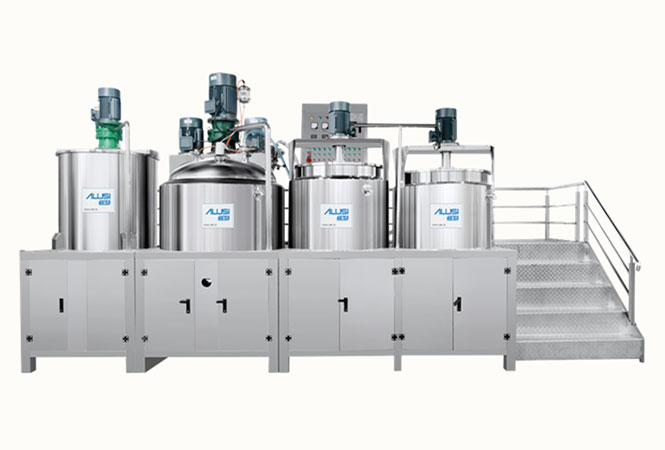
Emulsification is fundamentally the process of combining two immiscible liquids—typically oil and water—into a stable, uniform mixture. In cream production, this forms the foundational structure of countless products, from light moisturizers to rich therapeutic ointments. The challenge isn’t simply mixing these phases, but creating droplets small enough (typically 1-10 microns) that they resist separating over time.
An emulsifier machine for cream achieves this through controlled mechanical energy input. Unlike simple mixers that merely stir ingredients, industrial emulsifiers apply intense shear forces that break down internal phases into microscopic droplets. These droplets then become surrounded by emulsifying agents (like lecithin, polysorbates, or cetearyl alcohol) that prevent them from recombining. The result is what we recognize as cream: a semi-solid emulsion that maintains its consistency through temperature variations, shipping, and shelf storage.
Modern emulsifiers utilize three primary mechanical actions to achieve perfect emulsions. High-shear mixing employs rapidly rotating rotors and stators to create intense velocity gradients that tear droplets apart. Impact force involves propelling the mixture against hardened surfaces at high speed, further reducing particle size. Advanced systems also utilize ultrasonic cavitation, where sound waves create microscopic bubbles that implode, generating localized energy hotspots that break down droplets to nanoscale.
The most effective emulsifier machine for cream combines these principles in sequence. Initial coarse mixing combines phases, high-shear processing reduces droplet size, and vacuum-assisted homogenization removes entrapped air that could accelerate oxidation. This multi-stage approach yields creams with exceptional texture, enhanced active ingredient penetration, and shelf lives extending 24-36 months.
When investing in an emulsifier machine for cream, several technical factors determine your success. Shear rate, measured in meters per second, indicates how effectively the machine can reduce droplet size—higher shear rates (typically 20-40 m/s) produce finer, more stable emulsions. Motor power must be sufficient to handle your product’s viscosity; for thick creams, 5-10 HP systems are common. Temperature control is equally vital, as many emulsifiers generate heat through friction that can damage heat-sensitive actives like vitamins, peptides, or probiotics.
Material compatibility often separates adequate machines from exceptional ones. Pharmaceutical-grade stainless steel (316L) with polished finishes (Ra <0.8 µm) prevents contamination and simplifies cleaning. Seal materials should withstand both cleaning chemicals and your product ingredients—mechanical seals often outperform packing seals for cream applications. Modern systems increasingly feature CIP (Clean-in-Place) capabilities, reducing batch changeover time by 70% compared to manual cleaning.
Your production volume and product variety determine whether batch or continuous emulsification serves you better. Batch systems, ranging from 10-liter laboratory units to 2,000-liter production vessels, offer maximum flexibility for manufacturers producing multiple cream formulations. They allow complete process control at each stage and are ideal for limited runs or frequent recipe changes.
Continuous inline emulsifiers represent the pinnacle of high-volume production, capable of processing 500-10,000 liters per hour. These systems feed ingredients into a constant shear zone, producing uniform cream with exceptional repeatability. While requiring larger upfront investment, they reduce labor costs, minimize product loss during changeovers, and provide unmatched consistency across batches—critical for global brands maintaining identical product quality across continents.
The requirements for therapeutic creams elevate emulsification from cosmetic preference to medical necessity. An emulsifier machine for cream used in pharmaceutical applications must meet stringent regulations, including 21 CFR Part 11 compliance for data integrity, and produce emulsions with exacting consistency for dose-dependent actives. These systems often incorporate deaeration chambers to remove microbubbles that could affect volume measurements, and real-time viscosity monitoring to ensure batch-to-batch uniformity.
Recent advancements enable production of nanoemulsions with droplets below 200 nm, significantly enhancing transdermal delivery of active pharmaceutical ingredients. This technology allows lower concentrations of actives to achieve therapeutic effects, reducing potential side effects while improving patient compliance. The same equipment principles apply to cannabis-infused topicals, where emulsion stability directly affects cannabinoid distribution and bioavailability.
Today’s premium skincare market demands increasingly sophisticated textures that basic emulsification cannot achieve. Whipped creams with delicate, air-infused textures require specialized emulsifiers that incorporate precise gas volumes without collapsing the emulsion structure. Cooling-phase systems that add heat-sensitive ingredients post-emulsification preserve volatile compounds like retinoids or essential oils that would degrade under standard processing temperatures.
Multi-phase creams, featuring visually striking layers or gradient actives, represent the cutting edge of emulsion technology. Sequential emulsification modules create distinct phases that remain stable yet deliver ingredients in controlled sequences upon application. Such innovations command premium market positions and rely entirely on advanced emulsifier machine for cream capabilities that exceed traditional homogenization.
Even the most advanced emulsifier only performs as well as its operational parameters. Key process variables include emulsification temperature (typically 65-85°C for initial phase, 35-45°C for cooling phase), shear duration (2-15 minutes depending on viscosity), and addition sequences for different ingredient types. Emulsifying agents should be added during the oil phase, while water-soluble actives integrate during the aqueous phase. Thickeners often require specific temperature windows for optimal functionality.
Implementing in-process controls ensures consistent quality. Regular particle size analysis using laser diffraction instruments verifies emulsion stability, with ideal cream formulations showing droplet distributions between 2-8 microns. Accelerated stability testing (cycling between 4°C and 45°C) predicts shelf life, while viscosity profiles measured at different shear rates predict consumer application experience. Modern emulsifiers integrate with Process Analytical Technology (PAT) that automatically adjusts parameters based on real-time viscosity or particle size readings.
Proactive maintenance transforms your emulsifier from a consumable asset into a decade-long investment. Daily inspections should verify seal integrity and unusual vibrations; monthly maintenance includes lubrication of mechanical seals and inspection of rotor-stator clearances; annual overhauls typically replace wear components before failure. Many manufacturers now offer IoT-connected machines that predict maintenance needs based on motor current signatures and vibration patterns, reducing unexpected downtime by up to 90%.
Cleaning validation deserves particular attention in cream production, where residual oils can harbor microorganisms or cross-contaminate subsequent batches. A validated CIP system should achieve at least a 4-log reduction in bioburden, with periodic swab testing confirming cleaning effectiveness. For products containing allergens like nuts or soy, additional validation ensures no detectable transfer occurs between batches.
Even with excellent equipment, emulsion challenges occur. Cream separation often indicates insufficient shear energy, incorrect emulsifier concentrations, or pH imbalances affecting emulsifier performance. Grainy texture typically results from inadequate hydration of solid phase components or crystallization of fats during cooling. Incorporating sweep agitation during cooling phases, optimizing cooling rates (typically 1-2°C per minute), and ensuring proper homogenization temperature above the highest melting point of wax components resolve most texture issues.
For creams that become too thick or thin over time, reevaluate your stabilizing system. Synergistic combinations of emulsifiers (like cetearyl alcohol with polysorbate 60) often outperform single emulsifiers. Rheology modifiers added during the cooling phase (below 40°C) provide additional texture control. Modern emulsifier machine for cream designs with separate heating and cooling zones allow independent temperature control during these critical phases.
The “scale-up gap” between laboratory development and full production derails many promising cream formulations. Laboratory emulsifiers operate with different shear profiles and heat transfer characteristics than production equipment. Successful scaling requires matching key parameters beyond simple volume multiplication, particularly tip speed (rotor peripheral velocity) and power per volume.
Pilot-scale equipment (10-50 liter capacity) using the same mechanical principles as production machines bridges this gap effectively. Computational fluid dynamics modeling now allows virtual scale-up simulations, predicting how emulsion characteristics will change with equipment size. Many equipment manufacturers offer application labs where formulations can be tested on production-scale equipment before purchase, eliminating costly trial-and-error in your facility.
Next-generation emulsifier machines prioritize environmental responsibility alongside performance. Variable frequency drives reduce energy consumption by 30-50% compared to fixed-speed motors, while optimized rotor-stator geometries achieve equivalent shear with less power input. Heat recovery systems capture thermal energy from cooling phases to preheat subsequent batches, creating near-closed loop thermal management.
Water usage reduction represents another frontier, particularly relevant for cream production where equipment cleaning consumes significant resources. Self-cleaning surfaces with hydrophobic coatings reduce cleaning time and water volume, while advanced filtration systems enable water recycling for non-critical cleaning stages. Some facilities now achieve 90% reduction in water consumption through these integrated approaches.
Industry 4.0 transforms emulsifiers from standalone equipment into integrated manufacturing nodes. Modern systems feature standardized communication protocols (OPC UA, MQTT) that interface with Manufacturing Execution Systems for complete batch traceability. Digital twin technology creates virtual replicas of emulsification processes, allowing optimization without interrupting production.
Artificial intelligence applications now predict optimal emulsification parameters based on ingredient properties, learning from historical batch data to continuously improve outcomes. Blockchain integration provides immutable quality records throughout the supply chain, increasingly demanded by regulatory bodies and conscious consumers alike. These advancements make the modern emulsifier machine for cream not just production equipment, but a strategic data source for continuous improvement.
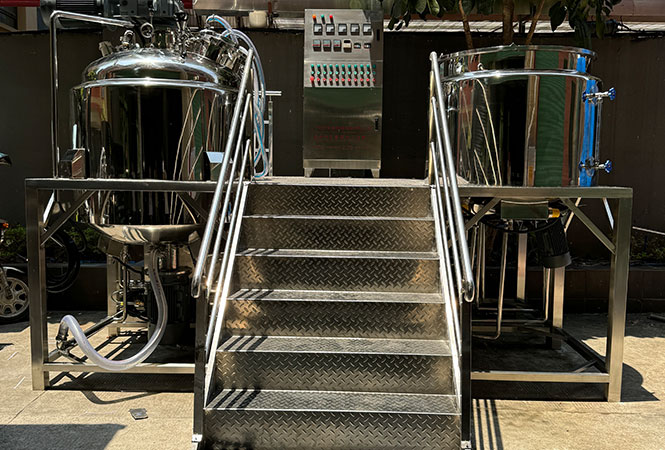
Selecting and optimizing an emulsifier machine for cream represents one of the most consequential decisions for cosmetic, pharmaceutical, and personal care manufacturers. Beyond mere equipment purchase, it’s an investment in product quality, brand reputation, and manufacturing efficiency. The ideal system balances current production needs with future capabilities, offering sufficient flexibility for product development while delivering the reliability required for commercial production.
As emulsion science advances, so too does equipment technology. The most successful manufacturers view their emulsification capability as a living system—regularly updated, continuously optimized, and strategically aligned with product development roadmaps. Whether you’re producing your first cream formulation or optimizing an established product line, the right emulsification technology serves as both foundation and catalyst for market success.
Remember that the perfect cream begins long before ingredients meet container—it starts with the precise mechanical energy applied within your emulsifier. By understanding the principles, applications, and innovations outlined here, you position your products not just to meet market expectations, but to redefine them through superior texture, stability, and performance that begins at the molecular level.

Contact Us