
The Ultimate Guide to Vacuum Homogenizer Cream Mixers: Elevate Your Emulsion Production

In the competitive landscape of cosmetics, pharmaceuticals, and specialty foods, product texture is no longer just a sensory feature—it is a brand statement. Consumers expect creams that absorb instantly, lotions that feel silky, and pharmaceutical ointments that deliver active ingredients consistently. Behind every premium emulsion on the shelf, there is a sophisticated piece of engineering: the Vacuum Homogenizer Cream Mixer.

If you are a formulation chemist, a production manager, or a business owner looking to scale up, understanding this equipment is crucial. This guide dives deep into the technology, benefits, selection criteria, and future trends of vacuum homogenizers to help you make a purchase decision that ensures quality, efficiency, and return on investment. 
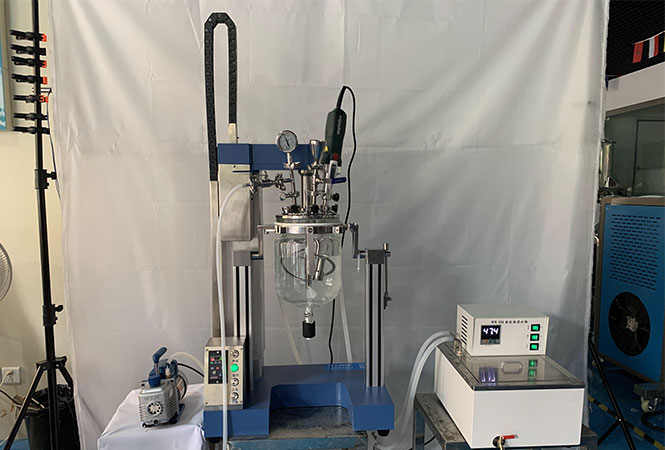
Industrial Emulsifier

What is a Vacuum Homogenizer Cream Mixer? Unpacking the Core Technology

A vacuum homogenizer cream mixer is a piece of advanced processing equipment designed to combine oil and water phases into a stable, uniform, and bubble-free emulsion under a vacuum environment. Unlike simple agitators, it utilizes mechanical force and vacuum pressure to create particles so fine they enhance the product”s stability and sensory appeal. 

The Principle of Triple Agitation

Modern high-shear mixers do not rely on a single mixing method. They employ a system of three independent stirring movements to achieve perfection .

  • Central Agitation: A slow-speed anchor or frame agitator continuously turns the bulk material, ensuring thermal uniformity.
  • High-Shear Homogenization: Located at the bottom of the tank, a rotor-stator assembly subjects the materials to intense mechanical and hydraulic shear. As the product passes through the narrow gap between the rotor and stator, droplets are broken down to the micron or sub-micron level .
  • Peripheral Scraping: Teflon or silicone blades constantly scrape the inner wall of the vessel. This prevents product burn-on, improves heat transfer, and ensures that even the material at the edges is incorporated into the mix.

The Role of Vacuum in Emulsion Quality

The “vacuum” aspect is what differentiates a standard mixer from a premium one. By removing air and volatile gases from the mixing chamber before and during the process, manufacturers can eliminate air bubbles entirely .

  • Oxidation Prevention: Exposure to air can degrade sensitive active ingredients like vitamins, retinol, or natural extracts. A vacuum environment preserves the integrity of these costly components.
  • Improved Texture: Without microbubbles, the final cream has a higher gloss, a smoother application, and a heavier, more luxurious feel.
  • Enhanced Absorption: Bubble-free emulsions break differently on the skin, allowing for better penetration of active ingredients.

Why Your Production Line Needs a Vacuum Homogenizer

Investing in a vacuum homogenizer is a strategic move that impacts everything from R&D agility to final product shelf life. Here is why top-tier manufacturers consider it the heart of their production line. 

From Lab Scale to Industrial Production: Seamless Scalability

One of the biggest headaches in product development is the “scale-up” effect—where a formula that worked perfectly in a 5-liter lab beaker fails in a 500-liter industrial tank. Leading manufacturers offer pilot-scale machines (typically 10L, 30L, and 50L) that replicate the exact geometric ratios and tip speeds of industrial production models . This means you can develop your formula on a Trilab or similar pilot unit and transfer it directly to a production line with zero surprises, ensuring consistent results from the first batch to the millionth.

Meeting Stringent Regulatory Standards (GMP & FDA)

For pharmaceutical and food applications, compliance is non-negotiable. Vacuum homogenizers are built to meet Good Manufacturing Practice (GMP) standards.

  • Hygienic Design: The equipment features polished stainless steel surfaces (often 316L) with a finish of Ra ≤ 0.4 µm to prevent bacterial growth .
  • CIP/SIP Capabilities: High-end models offer Cleaning in Place (CIP) and Sterilization in Place (SIP) systems. These allow for automated cleaning and sterilization without disassembling the machine, reducing downtime and ensuring sterility for medical creams or food products .

Key Considerations When Choosing a Vacuum Homogenizer Cream Mixer

Selecting the wrong mixer can lead to production bottlenecks, inconsistent quality, and costly downtime. Here are the critical technical specifications and features you must evaluate.

Material Quality and Surface Finish

The longevity of your machine depends on the quality of the stainless steel.

  • Grade: Ensure all product-contact parts are made from SS316L stainless steel. This “L” grade (Low Carbon) offers superior resistance to corrosion from salts, acids, and chlorides often found in cosmetic formulations compared to standard SS304 .
  • Welding: Poor welding creates crevices where bacteria can thrive. Look for suppliers who use automated welding techniques that ensure smooth, seamless joints.

Homogenizing Performance and Particle Size

The primary job of the machine is to reduce particle size.

  • Rotor-Stator Precision: The finer the gap and the higher the tip speed, the finer the emulsion. Top-tier machines can achieve particle sizes below 5 microns consistently, and sometimes as low as 0.2 to 0.5 microns for nano-emulsions .
  • Speed Control: Variable frequency drives on both the homogenizer and the agitator are essential. They allow you to dial in the exact shear force required for delicate formulations without destroying the structure of polymers or thickeners.

Automation and Data Integrity (Industry 4.0)

Modern manufacturing requires smart factories.

  • PLC and HMI: A Programmable Logic Controller (PLC) with a touch screen interface allows operators to save hundreds of recipes. This eliminates human error and ensures that Batch #1000 is identical to Batch #1 .
  • Data Logging: For pharmaceutical applications, traceability is key. Advanced systems record every parameter—temperature, vacuum level, mixing speed, and time—allowing for complete batch reports and audit trails .

Understanding the broader market helps justify the investment and anticipate future needs. The global market for vacuum homogenizing cream mixers is on a steady rise, projected to reach approximately $295 million by 2031, growing at a CAGR of around 4% .

The Clean Beauty and “Pharmaceucial” Trend

Consumers are scrutinizing ingredient lists more than ever. The demand for “clean” products with fewer preservatives requires manufacturers to rely on physical processes rather than chemical stabilizers. Vacuum homogenization provides this by creating such stable emulsions that the need for excess emulsifiers and stabilizers is reduced. Furthermore, the rise of “pharmaceucials” (cosmetics with drug-like benefits) requires the precision and sterility that only high-end vacuum mixers can provide.

Customization and High-Viscosity Processing

The market is shifting away from one-size-fits-all products. Manufacturers need flexibility.

  • Handling High Viscosity: There is a growing demand for thicker, butter-like consistencies (e.g., body butters, hair masks). A powerful scraper system and a robust homogenizer are required to turn over these viscous masses effectively. Machines with lifting vessels allow easy discharge of these thick products .
  • Modular Design: Suppliers are offering more modular systems where additional features—like powder feeders for difficult-to-disperse ingredients (e.g., xanthan gum, carbomers) or inline homogenizers for continuous processing—can be added as needed .

How to Qualify Your Supplier: Ensuring Quality and ROI

You are not just buying a machine; you are entering a partnership. The supplier”s expertise directly impacts your operational success. Here is how to vet potential partners. 

Beyond the Brochure: What to Ask

Don”t just look at the pretty pictures. Ask these tough questions:

  1. “Can you provide a Factory Acceptance Test (FAT)?” A reputable supplier will invite you to run your own product on their machine before shipping to ensure it meets your specs.
  2. “What is your spare parts availability?” Downtime is expensive. Ensure the supplier stocks critical spares like mechanical seals, rotors, and stators.
  3. “Is the machine CE or UL certified?” This confirms the electrical components and safety systems meet international safety standards .

The True Cost of Ownership

The purchase price is just the beginning. A cheap machine often leads to high maintenance costs, product waste due to inconsistency, and high energy consumption.

  • Energy Efficiency: High-quality motors and optimized geometry can significantly reduce the power required to achieve the same result.
  • Maintenance Access: Look for features like a lifting vessel or easy-access covers. If you can clean and change parts in 30 minutes instead of 2 hours, the savings add up quickly. A machine with a double mechanical seal on the homogenizer shaft will also last longer and prevent leaks .

Conclusion

The vacuum homogenizer cream mixer is the gold standard for producing high-quality emulsions. Whether you are formulating a new anti-aging serum or scaling up production of a pharmaceutical ointment, this technology provides the consistency, stability, and efficiency required to compete in today”s demanding market.

By focusing on key factors like material quality, automation, vacuum integrity, and supplier reputation, you can secure a piece of equipment that will serve as the backbone of your production line for decades.

Ready to Optimize Your Production Line?

Don”t let inconsistent mixing hold your brand back. Contact our team of engineering experts today to discuss your specific formulation needs and batch sizes. We can help you select the perfect vacuum homogenizer solution—from lab-scale R&D units to fully automated production lines.

INQUIRY