Home • Vacuum Emulsifier Machine: The Ultimate Guide for Industrial Mixing Excellence
Vacuum Emulsifier Machine: The Ultimate Guide for Industrial Mixing Excellence
Ailusi
2026-01-27
107
Introduction to Vacuum Emulsifier Machines
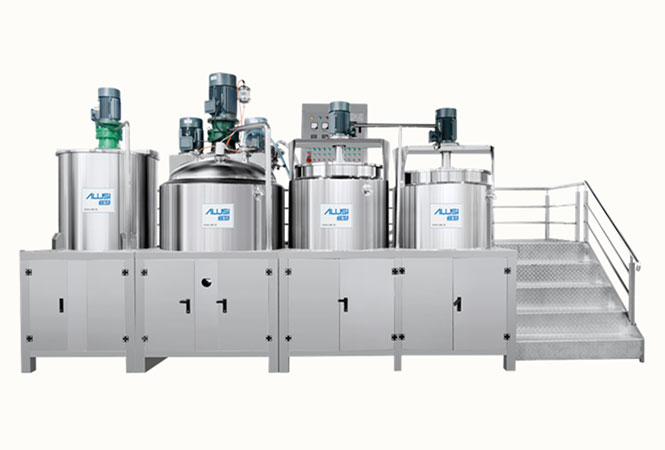
Vacuum emulsifier machines represent a pinnacle of mixing technology, combining high-shear emulsification with a vacuum environment to create exceptionally stable, homogeneous, and air-free products. These sophisticated industrial mixers are indispensable in industries where product consistency, texture, and shelf-life are critical. From pharmaceutical creams and cosmetic lotions to food sauces and chemical compounds, vacuum emulsifiers solve common production challenges like air inclusion, inconsistent texture, and inefficient mixing.
Toothpaste Making Machine
What sets vacuum emulsifiers apart is their ability to perform three crucial actions simultaneously: high-speed shearing for particle size reduction, homogeneous mixing for uniform distribution, and deaeration for product stability. This triple-action mechanism makes them superior to conventional mixers for applications requiring fine, stable emulsions and dispersions.
How Vacuum Emulsifier Machines Work: Core Principles
The Emulsification Process Under Vacuum
At its core, emulsification is the process of combining two immiscible liquids, like oil and water, into a stable, homogeneous mixture. A vacuum emulsifier machine enhances this process by removing the air from the mixing vessel. The vacuum environment (typically between -0.095 MPa and -0.099 MPa) serves multiple purposes: it prevents air bubbles from being incorporated during high-shear mixing, facilitates the removal of existing air from raw materials, and often lowers the boiling point of solvents for gentle heating or dehydration.
The process begins when ingredients are loaded into the sealed main vessel. The vacuum pump activates, removing air and creating a controlled low-pressure environment. The central high-shear emulsifier head—often a stator-rotor system or a fine tooth generator—then operates at high speeds (commonly 0-3000 rpm or higher), creating intense shear forces that break down droplets into micron or even sub-micron sizes. Simultaneously, a slow-speed anchor or frame stirrer scrapes the vessel walls, ensuring no material stagnates and heat transfer is uniform if jacketed heating/cooling is used.
Main Mixing Vessel: Typically a stainless-steel (SS 304 or 316L) jacketed tank with a capacity ranging from laboratory-scale 1L units to industrial 5000L machines. The jacket allows for precise temperature control via circulating water or oil.
Emulsification Head: The heart of the machine. The rotor-stator design is most common, where a high-speed rotor spins within a fixed stator, creating intense shear in the gap between them. The size and design of the teeth on the rotor and stator determine the final particle size.
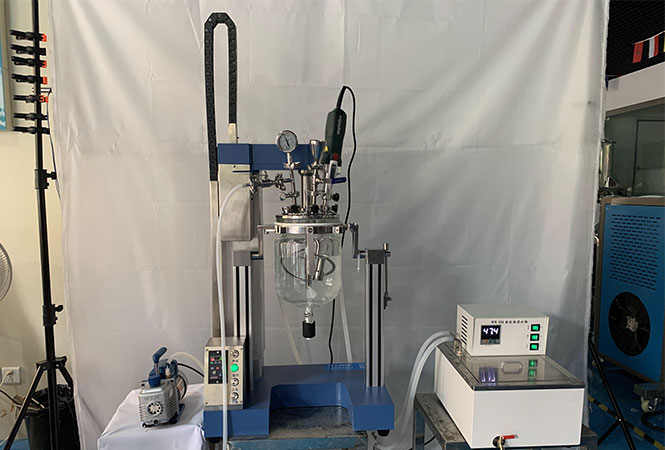
Vacuum System: Comprising a vacuum pump, water trap, and filter, this system creates and maintains the vacuum. Liquid-ring pumps are popular for their ability to handle vapor. The system often includes a vacuum breaker valve for controlled re-pressurization.
Hydraulic Lifting System: Allows for easy tilting or lifting of the vessel or emulsifier head for cleaning and discharging viscous products.
Control Panel: Modern machines feature PLC (Programmable Logic Controller) or touch-screen interfaces for recipe storage, process parameter control (speed, temperature, vacuum, time), and data logging.
Primary Applications and Industry Benefits
Cosmetics and Personal Care Manufacturing
The cosmetics industry is a primary adopter of vacuum emulsifier machine technology. The demand for luxuriously smooth, stable, and air-free products is non-negotiable. These machines are essential for producing:
Skincare Products: Creams, lotions, serums, and gels benefit from the fine, uniform texture and enhanced active ingredient dispersion achieved under vacuum, leading to better skin absorption and a premium feel.
Hair Care Products: Conditioners, hair masks, and styling emulsions require consistent viscosity and stability, which vacuum emulsification reliably provides.
Color Cosmetics: Foundations, BB creams, and lip products achieve flawless pigment dispersion and consistent color matching.
The benefit is a superior product with extended shelf-life, improved texture, and reduced risk of bacterial growth (as the closed system minimizes contamination).
Industrial Emulsifier
Pharmaceuticals and Food Processing
In these highly regulated industries, consistency, safety, and efficacy are paramount.
Pharmaceuticals: Used for topical ointments, antibiotic creams, sterile gels, and syrups. The closed, contaminant-free environment is ideal for GMP (Good Manufacturing Practice) compliance. Vacuum removal of air is critical for products where occlusion or chemical stability is affected by oxygen.
Food Industry: Ideal for high-value emulsions like mayonnaise, salad dressings, pastry creams, sauces, and flavorings. The process creates a smoother mouthfeel, prevents oxidation (preserving flavor and color), and ensures batch-to-batch consistency.
The closed system also minimizes volatile organic compound (VOC) emissions, enhancing worker safety and environmental compliance.
Choosing the Right Vacuum Emulsifier Machine
Critical Specifications to Evaluate
Selecting the wrong vacuum emulsifier machine can lead to product failure and costly losses. Focus on these key specifications:
Capacity and Vessel Design: Choose a working capacity that matches your batch size, allowing adequate headspace for foam collapse under vacuum. Consider the vessel’s aspect ratio, jacket coverage (full or partial), and discharge valve type (bottom or tilting).
Shear Power and Speed: The motor power (kW) and max rpm of the emulsifier head determine its shearing capability. Higher shear is needed for finer emulsions (e.g., nanoemulsions). Ensure the motor has variable speed control for process flexibility.
Vacuum Level: A deeper vacuum (measured in mbar or MPa of negative pressure) is necessary for highly viscous products or those extremely prone to aeration. -0.098 MPa is standard for most applications, but specialized processes may require deeper vacuum.
Material and Surface Finish: 316L stainless steel is preferred for corrosive ingredients or strict hygienic requirements. The surface finish, measured in Ra (roughness average), is crucial for cleaning and preventing bacterial harboring. A mirror polish (Ra < 0.4 µm) is standard for pharmaceuticals and cosmetics.
Automation, Hygiene, and Safety Features
Modern production demands smart and safe equipment.
Automation: PLC controls with recipe memory, SCADA integration, and data recording streamline production, ensure repeatability, and support quality audits.
Hygiene (CIP/SIP): Check for Clean-in-Place (CIP) systems that allow internal cleaning without disassembly. Sterilize-in-Place (SIP) capabilities using pure steam are vital for pharmaceutical applications.
Safety: Look for safety interlocks (e.g., vacuum prevents the lid from opening), emergency stops, pressure and temperature sensors, and explosion-proof configurations for volatile solvents.
Optimizing Operations and Troubleshooting
Best Practices for Maximum Efficiency and Product Quality
Follow a Logical Ingredient Addition Order: Typically, the water phase is added first and heated. Oil-soluble ingredients are mixed and heated separately (in a secondary vessel if available) before being drawn into the main vessel under vacuum. Heat-sensitive actives and fragrances are added last during the cool-down phase under mild mixing.
Master the “Three-Stage Mixing” Process: (1) Initial Mixing: Use the anchor stirrer at low speed to homogenize and heat/cool under vacuum. (2) High-Shear Emulsification: Activate the emulsifier head at high speed for a defined period to achieve the target particle size. (3) Deaeration and Cooling: Maintain vacuum and use slow anchor stirring to remove micro-bubbles and cool the batch, ensuring a compact, glossy final product.
Implement Rigorous Cleaning and Maintenance: Follow a strict post-production cleaning schedule. Regularly inspect and replace seal kits, stator-rotor sets, and vacuum pump fluids.
Common Operational Challenges and Solutions
Problem: Inconsistent Emulsion Stability.Solution: Review the emulsification time and speed. Insufficient shear may lead to droplet coalescence over time. Verify the vacuum level was maintained throughout the cooling phase.
Problem: Poor Vacuum Hold.Solution: Check all seals and gaskets for wear. Inspect the vessel lid seal, shaft seals, and valve diaphragms. Ensure the vacuum pump is serviced and the water trap is not full.
Problem: Overheating During Mixing.Solution: Utilize the cooling jacket effectively. For long mixing times, consider cycling the high-shear head in intervals rather than continuous operation.
Frequently Asked Questions (FAQ)
Q1: What is the main difference between a vacuum homogenizer and a vacuum emulsifier machine? While the terms are sometimes used interchangeably, a homogenizer typically uses a high-pressure piston pump to force product through a narrow gap, excelling at final particle size reduction. An emulsifier uses a high-shear rotor-stator mechanism for intensive mixing and size reduction within the vessel itself. Many advanced “vacuum emulsifier homogenizers” combine both systems for ultimate flexibility.
Q2: Can a vacuum emulsifier machine handle highly viscous pastes? Yes, but it requires careful selection. Machines for high-viscosity products need a powerful, low-RPM anchor stirrer with close-tolerance scrapers and a heavy-duty emulsifier head motor. The discharge mechanism (often a wide tilting or bottom piston valve) is also critical.
Q3: How important is the vacuum level for my product? It depends. For simple water-based lotions, a moderate vacuum may suffice. For silicone-based products, thick creams, or those containing volatile solvents, a deep and stable vacuum is essential to remove trapped air and prevent boiling at lower temperatures.
Q4: Is it worth investing in a PLC-controlled machine over a manual one? Absolutely for commercial production. PLC control ensures batch-to-batch consistency, reduces operator error, saves recipes, and provides documentation for quality assurance. It pays for itself in reduced waste and improved efficiency.
Conclusion
The vacuum emulsifier machine is more than just a mixer; it is a strategic asset for any business that depends on producing superior, stable emulsions and dispersions. Its ability to integrate mixing, homogenizing, and deaeration into a single, controlled process directly translates to higher product quality, reduced production time, and less material waste.
Investing time in understanding its principles, carefully selecting a machine matched to your specific needs, and following optimized operational protocols will maximize your return on investment. As consumer and regulatory demands for higher-quality, safer, and more consistent products continue to grow, mastering vacuum emulsifier technology becomes not just an advantage, but a necessity for staying competitive in industries from beauty to biotechnology.