
Products
A vacuum emulsifying machine is a specialized piece of equipment designed to create stable, homogeneous emulsions by combining immiscible liquids (like oil and water) under vacuum conditions. Unlike standard mixers, it integrates three key processes: high-shear homogenization to reduce particle size, vacuum deaeration to eliminate air bubbles, and precise temperature control to maintain product integrity. This results in products with superior texture, longer shelf life, and consistent quality—critical for industries such as cosmetics, pharmaceuticals, and food processing.
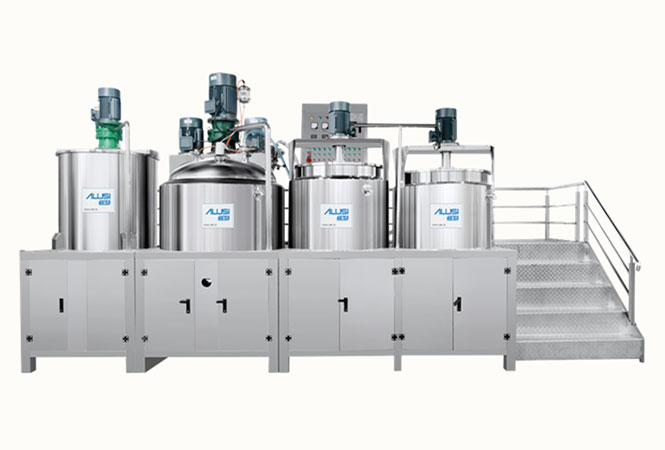
The main vessel is the heart of the machine, where all processing occurs. It should be constructed from 316L stainless steel for corrosion resistance and compliance with FDA, GMP, and CE standards. Sanitary design features—such as rounded corners, CIP (Clean-in-Place) systems, and quick-release clamps—are essential for industries requiring strict hygiene. Insulated vessels with double jackets help maintain temperature stability, reducing energy consumption and ensuring consistent results.
There are two main types of homogenizers used in vacuum emulsifying machines: rotor-stator and high-pressure. Rotor-stator homogenizers are ideal for most applications, offering adjustable shear rates and easy maintenance. High-pressure homogenizers are used for specialized products requiring ultra-fine particle sizes (e.g., nanoparticles for drug delivery). Key performance metrics include shear rate (measured in s⁻¹), processing capacity (L/h), and power consumption (kW).
Vacuum emulsifying machines are indispensable in the cosmetics industry for producing creams, lotions, serums, and makeup products. The vacuum process eliminates air bubbles, giving products a smooth, luxurious texture that consumers prefer. For example, a high-end anti-aging cream requires a stable emulsion to ensure active ingredients (like retinol or hyaluronic acid) are evenly distributed and penetrate the skin effectively. Leading brands use vacuum emulsifiers to create products with a lightweight feel and long-lasting hydration.
In the pharmaceutical industry, vacuum emulsifying machines are used to produce ointments, creams, and injectable emulsions. The vacuum environment prevents contamination and oxidation, critical for maintaining the potency of active pharmaceutical ingredients (APIs). For example, a topical steroid cream requires a stable emulsion to ensure uniform drug distribution across the skin. Vacuum emulsifiers also comply with strict regulatory requirements, such as ISO 13485 and cGMP, making them suitable for producing medical devices and drug products.
Selecting the right capacity is crucial for maximizing efficiency and minimizing costs. Laboratory-scale machines (5-50L) are ideal for R&D and small-batch production, while industrial-scale machines (100-10,000L) suit mass production. It’s important to consider future expansion; modular designs allow for easy upgrades to larger capacities without replacing the entire system. For example, a startup cosmetic brand might start with a 100L machine and upgrade to 500L as demand grows.
The future of vacuum emulsifying machines lies in Industry 4.0 integration, with IoT sensors, AI-driven controls, and cloud-based monitoring. IoT sensors collect real-time data on temperature, pressure, shear rate, and energy consumption, allowing operators to optimize processes remotely. AI algorithms analyze this data to predict maintenance needs, reduce downtime, and improve product quality. Cloud-based platforms enable data sharing across multiple locations, facilitating global collaboration and continuous improvement.
Manufacturers are increasingly focusing on sustainability, developing energy-efficient machines with variable frequency drives (VFDs) that adjust motor speed based on load. Heat recovery systems capture waste heat from the homogenizer to preheat raw materials, reducing energy consumption by up to 35%. Biodegradable lubricants and water-based cleaning solutions are becoming standard, minimizing environmental impact. Additionally, modular designs allow for easy upgrades, extending the machine’s lifespan and reducing waste.
A leading skincare brand in South Korea replaced their traditional mixers with vacuum emulsifying machines, resulting in a 45% reduction in product defects and a 30% increase in shelf life. The vacuum process eliminated air bubbles, giving their creams a luxurious texture that resonated with consumers. Sales of their anti-aging line increased by 35% within six months, and the brand expanded into new markets in Southeast Asia.
A biotech firm in the United States used a vacuum emulsifying machine to produce a novel injectable emulsion for cancer treatment. The precise particle size control (100-200 nm) ensured uniform drug distribution, improving therapeutic efficacy and reducing side effects. The machine’s compliance with FDA standards allowed the company to fast-track clinical trials, bringing the product to market 18 months ahead of schedule.
Choosing the right vacuum emulsifying machine is a critical decision that impacts product quality, production efficiency, and long-term profitability. By understanding the key components, applications, and maintenance requirements, businesses can select a machine that meets their specific needs and complies with industry standards. As technology advances, integrating smart features and sustainable practices will become increasingly important, helping businesses stay competitive in a rapidly evolving market.
Whether you’re a small startup or a large multinational corporation, a vacuum emulsifying machine is an investment that pays off in improved product quality, reduced costs, and increased customer satisfaction. By following the guidelines in this guide, you can select, operate, and maintain your machine for optimal results, ensuring your products stand out in a crowded market.
Disclaimer: This guide is for informational purposes only. Always consult with a qualified engineer or equipment manufacturer to determine the best solution for your specific needs. Compliance with local regulations and industry standards is the responsibility of the user.

Contact Us