
Products
Vacuum mixer homogenizers leverage negative pressure environments to revolutionize material processing. By removing air from the mixing chamber, these machines eliminate two major production challenges: oxidation and air entrapment. In pharmaceutical manufacturing, for example, oxidation can degrade active pharmaceutical ingredients (APIs), reducing their efficacy. Vacuum mixing prevents this by creating an oxygen-free environment, ensuring APIs retain their potency for longer. Similarly, in food production, air bubbles in sauces or dressings can cause texture inconsistencies—vacuum technology ensures a smooth, uniform product that meets consumer expectations.
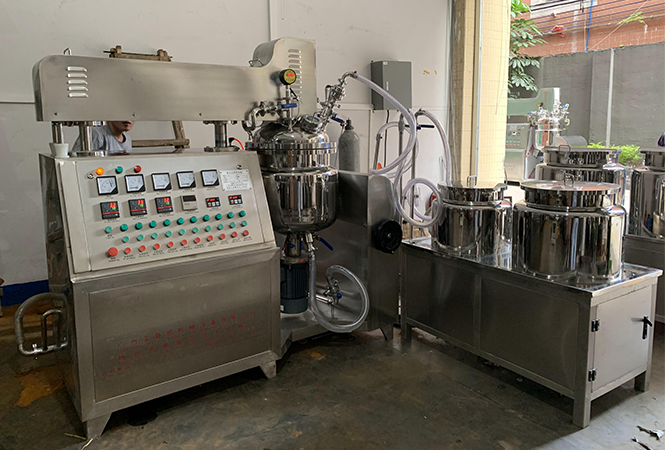
Traditional mixing methods often struggle with high-viscosity materials and require multiple processing steps. A vacuum mixer homogenizer combines mixing, homogenization, and degassing into one seamless operation. For instance, producing a high-end cosmetic cream with conventional equipment might take 3-4 hours, involving separate mixing, heating, and degassing stages. With a vacuum mixer homogenizer, the same product can be manufactured in 1-2 hours, with fewer quality control issues. This efficiency translates to lower production costs and faster time-to-market for manufacturers.
In the pharmaceutical industry, vacuum mixer homogenizers are used to produce oral suspensions, ointments, and injectable solutions. The homogenization process reduces particle size to nanometer scales, which is critical for drug solubility and bioavailability. For example, in the production of antibiotic suspensions, smaller particle sizes allow for faster absorption into the bloodstream, improving therapeutic outcomes. Additionally, the vacuum environment prevents contamination, a key requirement for compliance with Good Manufacturing Practices (GMP).
Cosmetic manufacturers rely on vacuum mixer homogenizers to create products with luxurious textures and stable formulations. In the production of anti-aging serums, the homogenizer breaks down active ingredients like hyaluronic acid into microdroplets, ensuring even distribution across the product. Vacuum degassing eliminates air bubbles, resulting in a non-foamy, smooth serum that applies evenly to the skin. Brands like Shiseido and Lancôme use this technology to maintain their reputation for high-quality, effective products.
Vacuum mixer homogenizers come in various sizes, from bench-top models (5-20L) for R&D to industrial-scale units (500-2000L) for mass production. When selecting a machine, manufacturers must consider their current production volume and future growth plans. A scalable model with modular components allows businesses to expand their operations without investing in entirely new equipment. For example, a small cosmetic startup might begin with a 50L model and later add a larger mixing chamber as demand increases.
The construction material of a vacuum mixer homogenizer is crucial for ensuring product safety and machine durability. Stainless steel (316L grade) is the gold standard for food and pharmaceutical applications due to its corrosion resistance and ease of cleaning. For industries handling abrasive materials, like ceramics or adhesives, machines with hardened steel components are recommended. Additionally, seals and gaskets should be made from food-grade or pharmaceutical-grade materials to prevent contamination.
Before starting the machine, operators must complete a thorough preparation checklist. This includes: 1) Inspecting the vacuum pump for oil levels and functionality; 2) Cleaning the mixing chamber with approved sanitizers; 3) Verifying that all safety interlocks are engaged; 4) Calibrating temperature and pressure sensors; 5) Preheating or cooling the chamber to the required process temperature. Following these steps ensures safe operation and prevents product defects.
Each application requires specific process parameters to achieve optimal results. For high-viscosity materials like adhesives, operators should use a slow mixing speed (50-100 RPM) initially, gradually increasing to 200-300 RPM as the material becomes more homogeneous. The homogenizer speed should be set based on the desired particle size—higher speeds (10,000-15,000 RPM) for nanometer-scale particles, lower speeds (5,000-8,000 RPM) for micrometer-scale particles. Vacuum levels typically range from 0.05 to 0.09 MPa, depending on the material’s sensitivity to air.
Many materials, such as biopharmaceuticals or natural cosmetics, are temperature-sensitive and can degrade if exposed to high heat. Vacuum mixer homogenizers with precise temperature control systems (±0.5°C accuracy) address this challenge. For example, in the production of probiotic yogurt, the machine maintains a temperature of 40-45°C during mixing, ensuring probiotics remain viable. Some advanced models even feature dual-temperature zones, allowing different parts of the mixing chamber to be heated or cooled independently.
Manufacturers often require customized solutions to meet unique production needs. Vacuum mixer homogenizer suppliers offer a range of customization options, including: 1) In-line homogenization systems for continuous production; 2) Explosion-proof designs for hazardous materials; 3) Automated cleaning-in-place (CIP) systems for GMP compliance; 4) Data logging and integration with SCADA systems for process monitoring. For example, a chemical manufacturer producing flammable adhesives might opt for an explosion-proof machine with inert gas purging capabilities.
A leading pharmaceutical company specializing in injectable medications faced challenges with their conventional mixing process. Their old equipment required 4 hours to produce a batch of antibiotic suspension, with a 10% rejection rate due to air bubbles. After investing in a vacuum mixer homogenizer, they reduced production time to 2 hours and eliminated air bubble-related defects. This not only increased their output but also improved product quality, leading to a 15% increase in customer satisfaction.
A luxury cosmetic brand wanted to improve the shelf life of their anti-aging creams. Their existing process used conventional mixing, which resulted in creams with a shelf life of 12 months. By switching to a vacuum mixer homogenizer, they eliminated oxidation and air entrapment, extending the shelf life to 14.4 months. This allowed the brand to reduce waste and offer customers a longer-lasting product, boosting their market share by 8% within a year.
The next frontier in vacuum mixer homogenizer technology is artificial intelligence (AI) integration. Smart machines equipped with machine learning algorithms can analyze real-time process data to optimize mixing parameters automatically. For example, if the machine detects that a batch is taking longer to homogenize than usual, it can adjust the speed or temperature to speed up the process. This not only reduces human error but also ensures consistent product quality across batches.
As sustainability becomes a top priority for industries worldwide, vacuum mixer homogenizer manufacturers are focusing on eco-friendly designs. New models feature energy-efficient motors that reduce power consumption by up to 25%, and heat recovery systems that reuse waste heat for other production processes. Additionally, some machines use biodegradable lubricants and have modular components that are easy to recycle at the end of their lifecycle. These innovations help manufacturers reduce their carbon footprint while maintaining high production standards.
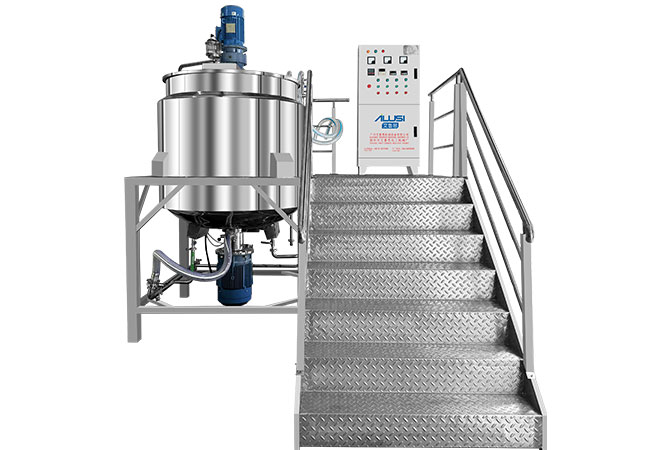
Vacuum mixer homogenizers are no longer a luxury—they are a necessity for modern manufacturing. By combining mixing, homogenization, and degassing into one efficient process, these machines help businesses improve product quality, reduce production costs, and stay competitive in today’s fast-paced market. Whether you’re in pharmaceuticals, cosmetics, food, or any other industry that requires precise material processing, a vacuum mixer homogenizer is an investment that will deliver long-term returns.
To learn more about how vacuum mixer homogenizers can benefit your business, contact our team of experts for a personalized consultation. We offer a range of machines tailored to your specific needs, along with comprehensive training and support to ensure you get the most out of your investment.

Contact Us